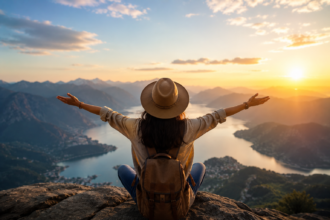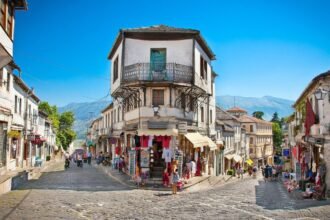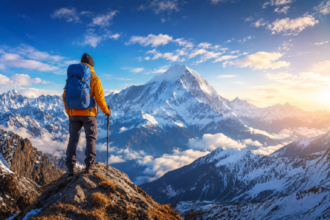

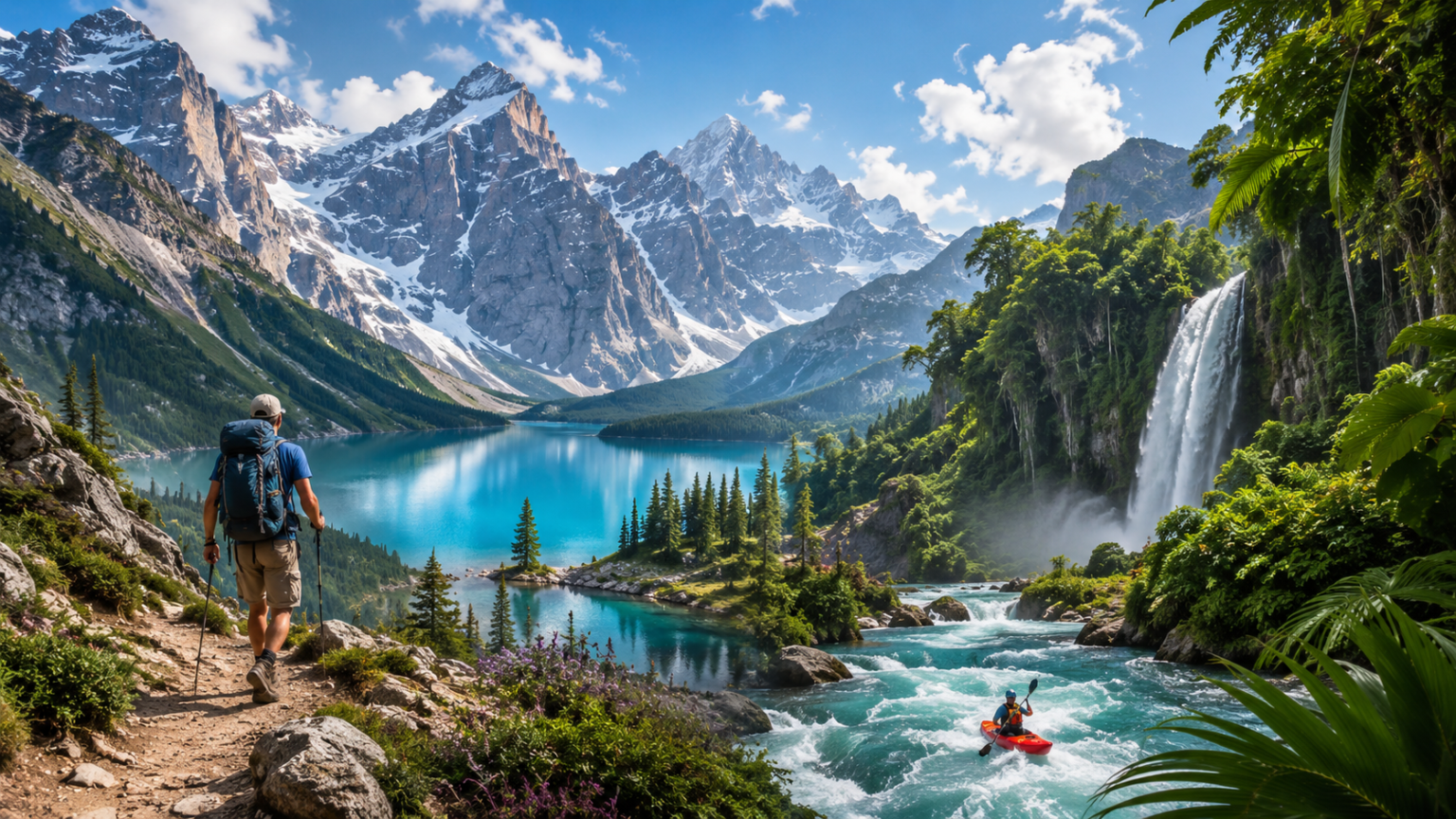

Travel is changing. For a growing number of travellers, seeing a destination is no longer enough. They want to hike it, climb it, paddle through it, cycle across it, or occasionally jump off something very high while securely attached to a rope.
That appetite for outdoor adventure travel is arriving at a time when global tourism itself has regained momentum. International tourism returned to pre-pandemic levels in 2024, with around 1.4 billion international tourist arrivals worldwide, while arrivals grew another 5% in the first quarter of 2025, according to UN Tourism.
Yet the most memorable adventure trips are rarely about adrenaline alone. The best destinations combine spectacular landscapes, accessible wilderness, local culture, and enough variety to suit everyone from casual hikers to experienced mountaineers.
From the granite towers of Patagonia to the high-altitude deserts of Ladakh, here are eight spectacular travel hotspots that deserve a place on an outdoor explorer’s bucket list.
1. Queenstown, New Zealand: Where Adventure Became an Industry
Few places have embraced adventure quite like Queenstown.
Surrounded by the Southern Alps and sitting beside Lake Wakatipu, the South Island town has built an international reputation as one of the world’s great outdoor playgrounds. New Zealand’s official tourism organisation describes Queenstown as the country’s adventure capital, while the local tourism board lists more than 200 activities ranging from mild experiences to extreme thrills.
The region also has legitimate credentials for adventure. Commercial jet boating emerged here in the 1950s, while the Kawarau Bridge became the site of the world’s first commercial bungy operation in 1988.
2. Costa Rica: Rainforest Adventure with a Sustainable Edge
Imagine waking beside a volcano, ziplining through a cloud forest before lunch and rafting through tropical rainforest in the afternoon.
That is the appeal of Costa Rica.
More than a quarter of the country’s territory is reserved for conservation, creating an unusual combination of accessible adventure tourism and protected landscapes.
Instead of concentrating everything in one resort town, Costa Rica spreads outdoor exploration across dramatically different ecosystems.
Around Arenal and La Fortuna, travellers can hike volcanic terrain, cross hanging bridges, ride horses and soak in geothermal hot springs. Monteverde specialises in cloud-forest hiking, canopy experiences and wildlife encounters.
Then there are the rivers.
The Pacuare offers Class III-IV rafting, while sections of the Reventazón range from beginner-friendly Class III water to demanding Class IV-V rapids.
Don’t miss
- Ziplining through Monteverde
- Hiking around Arenal
- White-water rafting
- Surfing on the Pacific coast
- Wildlife walks
- Canyoning and waterfall rappelling
Costa Rica proves that outdoor adventure travel does not have to mean choosing between biodiversity and adrenaline.
Best for: Wildlife lovers, couples and mixed-experience groups
Ideal time: Depends heavily on the region and activity; several adventure experiences operate year-round
3. Torres del Paine, Chile: Trekking at the End of the World
There are hiking destinations, and then there is Torres del Paine.
Located in Chilean Patagonia, the national park covers approximately 227,000 hectares, where granite towers rise above glacial lakes, wind-scoured steppe and Magellanic forests.
Its legendary W Trek is among South America’s signature hiking experiences.
The route extends for roughly 70 kilometres over five days, connecting Base Torres, the French Valley and Grey Glacier. Those seeking a greater challenge can attempt the O Circuit, a 93-kilometre, nine-day journey around more remote sections of the massif.
Wildlife adds another dimension. Guanacos wander across open grasslands while condors circle overhead, and the wider ecosystem is also home to pumas.
The essential Patagonia experiences
Hike to Base Torres at sunrise, trek beside Grey Glacier, navigate glacial waters or extend the journey through Puerto Natales and Chile’s wider Patagonian wilderness.
One warning belongs in every Patagonia itinerary: the weather can change quickly. Chile’s official tourism platform specifically advises visitors to prepare for unpredictable conditions.
Best for: Serious hikers, landscape photographers and wilderness travellers
Ideal time: Southern Hemisphere spring and summer
4. Iceland: Outdoor Exploration on a Geological Frontier
In Iceland, the landscape often feels unfinished.
Glaciers run into volcanic terrain. Waterfalls plunge through black rock. Geothermal areas steam beside mountains and lava fields stretch toward the horizon.
Iceland’s official tourism organisation calls the country an outdoor enthusiast’s paradise because of its combination of mountains, volcanoes, glaciers, rivers, caves, and rugged terrain.
That geographic concentration makes Iceland particularly attractive for travellers who want several types of adventure within a relatively short trip.
You can hike one day, kayak the next, and explore glacial environments after that.
Top outdoor experiences in Iceland
Look beyond the standard Golden Circle road trip and consider hiking in the Highlands, glacier exploration with professional guides, kayaking, horseback riding, lava-field walks, and multi-day trekking.
Summer’s long daylight hours are especially useful for hiking and road-based exploration.
Iceland also rewards restraint. Glaciers, rapidly changing weather, and volcanic environments demand respect. Check official conditions and use qualified operators for technical activities rather than treating spectacular landscapes as amusement parks.
Best for: Road trippers, photographers, and geology enthusiasts
Ideal time: Summer for hiking; winter for snow landscapes and seasonal experiences
5. Ladakh, India: High-Altitude Adventure in the Himalayas
For travellers from India looking for extraordinary outdoor adventure travel without leaving the country, few destinations rival Ladakh.
The landscape feels stripped back to its geological essentials: enormous mountain ranges, high-altitude lakes, winding roads, monasteries and an almost lunar desert.
India’s official tourism portal describes Ladakh as a high-altitude desert sitting at over 11,000 feet, surrounded by the Himalayan, Zanskar, and Karakoram ranges. Trekking, rafting, mountain biking, camping and climbing are among its major adventure attractions.
The Indus and Zanskar rivers introduce water-based adventure into an otherwise arid mountain environment, while Pangong Tso, Tso Moriri, and Tso Kar offer some of the region’s most striking landscapes.
Experiences worth building a trip around
Explore Leh before gradually venturing farther into the mountains, trek through valleys and mountain passes, cycle dramatic roads, camp under extraordinarily clear skies, or experience rafting on Himalayan rivers.
The altitude is not something to rush. Build acclimatisation time into your itinerary and match your activities to your experience and current local conditions.
Best for: Indian adventure travellers, bikers, and trekkers
Ideal time: Generally the warmer months for conventional road trips and trekking
6. Interlaken, Switzerland: Alpine Adventure Without Going Off-Grid
Adventure travel sometimes involves sacrificing comfort.
Interlaken does not require that compromise.
Positioned between Lake Thun and Lake Brienz in Switzerland’s Bernese Oberland, Interlaken combines remarkably accessible alpine scenery with one of Europe’s most mature adventure-sports ecosystems.
Switzerland Tourism calls it a world leader in adventure sports, with the surrounding lakes, mountain villages, glaciers, and Bernese Alps accessible through the country’s extensive rail and mountain-transport system.
Paragliding is one of its signature experiences, with Switzerland Tourism noting that the area offers excellent flying opportunities across much of the year.
Try these
Go paragliding above the lakes, hike around the Bernese Oberland, explore mountain villages, tackle canyoning or climbing experiences, or make excursions towards Jungfraujoch.
Interlaken works particularly well for groups where one person wants adrenaline, and another wants mountain scenery, cafés, and comfortable trains.
Best for: Couples, luxury-adventure travellers and first-time Alpine visitors
Ideal time: Summer for hiking; winter for snow-based adventures
7. Banff National Park, Canada: The Canadian Rockies at Their Most Dramatic
Turquoise glacial lakes may dominate social media photographs of Banff, but the park offers far more than scenic viewpoints.
Canada’s first national park contains more than 1,600 kilometres of maintained hiking trails, in addition to over 190 kilometres of mountain-bike trails and opportunities for paddling, climbing, skiing, snowshoeing, and wildlife viewing.
The prime alpine hiking period generally runs from July through mid-September, according to Parks Canada. Higher trails can remain snow-covered into summer, making checking trail and avalanche conditions essential.
Famous locations such as Lake Louise and Moraine Lake are only the beginning. Experienced hikers can move deeper into the landscape, while casual visitors can still experience spectacular terrain through shorter trails and paddling.
For travellers visiting in 2026, Parks Canada says its Canada Strong Pass provides free admission and discounted camping and overnight stays during the specified June 19-September 7 period.
Best for: Hikers, campers, families, and wildlife enthusiasts
Ideal time: July to mid-September for prime hiking
8. Madeira, Portugal: Europe’s Island Playground for Hikers and Canyoneers
Madeira has emerged as one of Europe’s most compelling outdoor destinations because enormous landscapes are compressed onto a relatively small Atlantic island.
Mountains rise almost directly from the ocean. Ancient Laurissilva forest covers steep terrain, waterfalls cut through narrow ravines and the island’s famous levadas create an extensive walking landscape.
Official tourism resources highlight hiking, mountain biking, trail running, and canyoning among Madeira’s major nature activities.
Canyoning is particularly impressive. Routes range from approachable beginner experiences to technical descents involving waterfalls and rappels reaching dozens of metres.
There is also an important planning change for 2026: since January 1, access to Madeira’s classified walking trails requires advance reservations, with visitor fees applying to the system. Trail status can also change, making an official check before setting out essential.
Best for: Hikers, trail runners and canyoning enthusiasts
Ideal time: Much of the year, depending on the activity
Which Outdoor Adventure Travel Destination Should You Choose?
| Destination | Best For | Signature Adventure | Adventure Level |
|---|---|---|---|
| Queenstown | Adrenaline | Bungy and jet boating | Easy to Extreme |
| Costa Rica | Nature + adventure | Rafting and ziplining | Easy to Advanced |
| Patagonia | Trekking | W and O Circuits | Moderate to Hard |
| Iceland | Geological landscapes | Hiking and glaciers | Easy to Advanced |
| Ladakh | High-altitude exploration | Trekking and biking | Moderate to Hard |
| Interlaken | Alpine adventure | Paragliding | Easy to Advanced |
| Banff | Wilderness | Hiking and paddling | Easy to Hard |
| Madeira | Island exploration | Hiking and canyoning | Easy to Hard |
How to Plan an Adventure Trip Without Turning It Into an Endurance Test
An excellent adventure holiday does not require squeezing six activities into every day.
In fact, slower itineraries are often better.
Choose one major activity every day or two, leaving room for weather changes and recovery. Match the destination to your actual fitness and technical ability rather than the version of yourself that appears after watching three mountaineering documentaries.
For technical experiences such as glacier travel, canyoning, advanced rafting, or mountaineering, use qualified local guides and reputable operators.
Most importantly, check official trail conditions, closures, local regulations, and weather shortly before travelling. Madeira’s reservation system and Banff’s changing alpine conditions are good reminders that an itinerary copied from a two-year-old travel post may no longer be accurate.
Adventure Travel Is Also About Protecting the Places We Explore
The growth of adventure tourism creates an obvious contradiction: the extraordinary landscapes travellers want to discover can also be damaged by excessive visitation.
Good outdoor adventure travel therefore increasingly means travelling responsibly.
Stay on marked routes, carry waste out, avoid disturbing wildlife, respect local communities, and favour operators that demonstrate genuine environmental responsibility.
Costa Rica’s conservation model, New Zealand’s push toward more regenerative visitor experiences, and national park management systems in destinations such as Banff show how outdoor tourism is increasingly connected to conservation rather than simply consumption.
Final Thoughts: Go Beyond the Viewpoint
The world’s most spectacular places reveal themselves differently when you experience them under your own power.
A Patagonian mountain looks different after hours on a trail. A Costa Rican rainforest sounds different when you are inside its canopy. Lake Wakatipu becomes significantly more memorable when you are hurtling towards it at the end of a bungy cord.
That is ultimately the appeal of outdoor adventure travel.
It transforms a destination from something you photograph into something you participate in.
Whether your definition of adventure is a five-day trek through Patagonia, rafting a Costa Rican river, cycling through Ladakh, or simply walking deeper into the wilderness than you normally would, these spectacular travel hotspots offer something increasingly valuable: the chance to come home with a story rather than just a collection of photographs.
Stay connected with Business Herald for the latest business news, insights, and updates.
Follow us on Facebook, Instagram, LinkedIn, and YouTube.
Join our growing community on WhatsApp and Telegram for real-time updates delivered directly to you.