

The world’s most famous attractions continue to draw enormous crowds, but a quieter change is reshaping how many people plan their holidays.
Travellers are increasingly looking beyond overloaded city centres, famous beaches and heavily photographed landmarks. They want local food, living heritage, traditional architecture, nature and meaningful interaction with communities.
This search has placed lesser-known travel destinations at the centre of a broader shift towards slower and more experience-led tourism.
International tourist arrivals increased by 4% in 2025, demonstrating the continuing strength of global travel demand. At the same time, industry research suggests visitors are placing greater value on authentic local experiences and direct engagement with the distinctive character of destinations.
Travelling away from heavily promoted hotspots does not mean searching for places untouched by tourism. It means choosing destinations that receive less international attention than major tourism icons and approaching them with curiosity, patience and respect.
From India’s Northeast and Japan’s historic walking routes to the mountain settlements of Georgia and the river towns of Colombia, these destinations show that memorable travel is often found outside the most familiar itineraries.
Table of Contents
- Why Lesser-Known Destinations Are Gaining Attention
- Gjirokastër, Albania
- Upper Svaneti, Georgia
- Kuldīga, Latvia
- Kiso Valley, Japan
- Ziro Valley, India
- Majuli, India
- Lamu Old Town, Kenya
- Mompox, Colombia
- How Offbeat Tourism Supports Local Economies
- How to Travel Responsibly
- Frequently Asked Questions
Why Lesser-Known Travel Destinations Are Gaining Attention
Popular destinations often possess outstanding cultural or natural attractions. Their popularity is understandable.
However, excessive visitor concentration can place pressure on housing, public infrastructure, water, waste-management systems and historic neighbourhoods. When tourism grows faster than local capacity, residents may face rising living costs while the experience offered to visitors also deteriorates.
UN Tourism states that sustainable tourism principles should apply to every kind of destination, including mass-tourism centres. Responsible development must balance environmental resources, cultural authenticity and long-term economic benefits.
Exploring less-congested places can help distribute tourism spending more widely. It may support small accommodation providers, local guides, restaurants, craftspeople and transport operators that receive limited benefit from national tourism growth.
For travellers, the rewards can include:
- more meaningful cultural interactions;
- fewer queues and congested viewpoints;
- stronger connections with local food and traditions;
- opportunities for walking, cycling and slow travel; and
- a better understanding of regional identities beyond national capitals.
The following destinations are not completely unknown. Several are protected heritage sites or recognised domestic attractions. Their appeal lies in being less prominent within international mass-tourism circuits.
1. Gjirokastër, Albania: A City Built from Stone
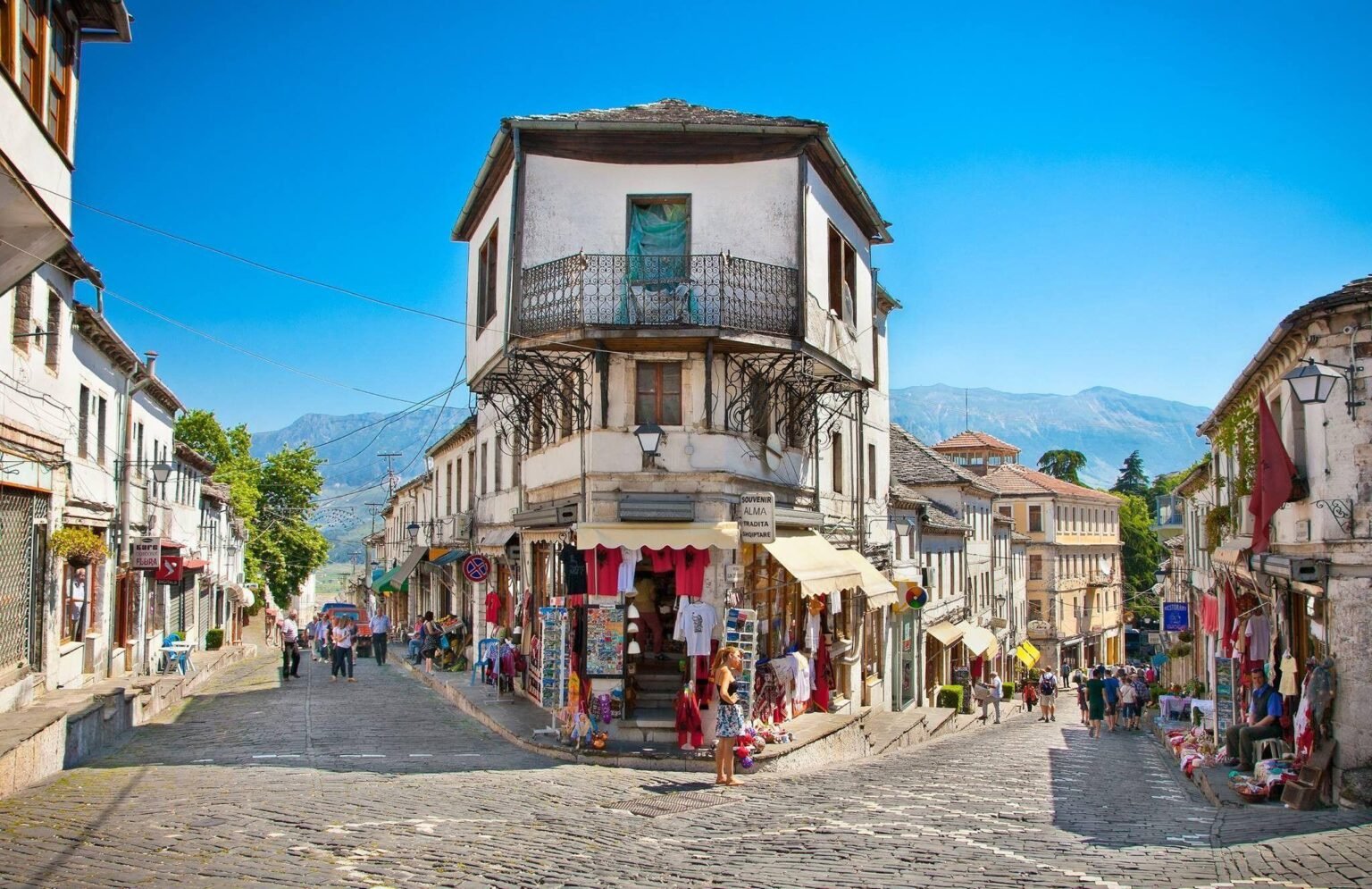
Gjirokastër rises across the slopes of southern Albania’s Drino Valley, where grey stone roofs, narrow streets and fortress-like houses create one of the Balkans’ most distinctive urban landscapes.
Together with Berat, its historic centre is recognised by UNESCO as a rare surviving example of Ottoman-period architecture. Gjirokastër developed around a 13th-century citadel and retains tower houses, a traditional bazaar, an 18th-century mosque and historic churches.
The city rewards slow exploration.
Visitors can walk through the steep bazaar streets, examine the architecture of traditional residences and climb towards the castle for views across the valley. Small museums, cafés and family-operated guesthouses offer an experience that feels different from the beach-focused image often associated with Albania.
Why Gjirokastër Stands Out
Its appeal comes from the combination of architecture, landscape and everyday urban life. The historic centre remains inhabited rather than functioning solely as an open-air monument.
Gjirokastër can also be combined with other southern Albanian destinations, allowing travellers to move beyond a single crowded coastal resort and spend more time within the country’s interior.
Ideal For
Heritage travellers, photographers, architecture enthusiasts and visitors planning a slower Balkan itinerary.
2. Upper Svaneti, Georgia: Medieval Towers Beneath the Caucasus
Upper Svaneti is a high-altitude region in Georgia’s Caucasus Mountains known for dramatic scenery, isolated villages and medieval defensive towers.
UNESCO describes the region as an exceptional mountain landscape preserved partly through long geographical isolation. The village of Chazhashi retains more than 200 tower houses, which historically served as both residences and defensive structures.
Mestia is the principal base for many visitors, while the surrounding valleys provide access to village walks, longer trekking routes and views of snow-covered peaks.
The experience is not limited to scenery. Svaneti possesses its own cultural identity, architectural traditions, cuisine and history. Local museums and guesthouses can provide context that is easily missed when the region is treated only as an adventure destination.
Why Upper Svaneti Stands Out
The towers create an extraordinary visual connection between settlement and landscape. Unlike a conventional mountain resort, Svaneti’s appeal is inseparable from its living villages and regional culture.
Ideal For
Hikers, cultural travellers, mountain photographers and visitors comfortable with slower transport and changing weather.
3. Kuldīga, Latvia: A Preserved Town Beside the Venta
Kuldīga offers an alternative to Europe’s crowded medieval centres.
Located in Latvia’s western Courland region, the town developed near the meeting point of the Venta River and the Alekšupīte stream. UNESCO describes its old town as an exceptionally well-preserved traditional urban settlement with origins extending to the 13th century.
Its streets contain timber buildings, masonry houses, quiet courtyards and a human-scale townscape that encourages exploration on foot.
Kuldīga’s charm is less about ticking off major monuments and more about atmosphere. Travellers can spend time near the river, explore the historic centre and experience a smaller Latvian town beyond Riga’s better-known attractions.
Why Kuldīga Stands Out
It provides the architecture and walkability travellers often seek in famous European heritage towns, but within a quieter setting.
Its UNESCO inscription in 2023 has increased recognition, making thoughtful visitor management increasingly important as interest grows.
Ideal For
Couples, slow travellers, architecture enthusiasts and visitors exploring the Baltic states by road.
4. Kiso Valley, Japan: Walking Through the Edo Period
Japan’s major cities attract millions of visitors, but the Kiso Valley offers a different view of the country.
The valley contains one of the best-preserved sections of the Nakasendo, the historic mountain road that connected Kyoto with Edo, present-day Tokyo. During the Edo period, travellers used a network of 69 post towns providing accommodation, food and services along the route.
Post towns including Tsumago, Magome and Narai preserve wooden buildings, traditional streetscapes and links to Japan’s trading and travel history.
The walk between Magome and Tsumago is among the most accessible introductions to the route. Travellers can also stay overnight in traditional accommodation, explore craft traditions or extend the journey through other sections of the valley. Japan’s official tourism organisation describes Kiso as a rugged, forested region offering a step back into rural Japan.
Why the Kiso Valley Stands Out
It offers heritage through movement.
Instead of observing history from one fixed attraction, visitors follow paths once used by merchants, monks and travellers moving between Japan’s major political and commercial centres.
Ideal For
Walkers, history enthusiasts, railway travellers and visitors seeking a rural addition to a Tokyo–Kyoto itinerary.
5. Ziro Valley, India: Culture, Rice Fields and Sustainable Farming
Ziro Valley in Arunachal Pradesh offers pine-covered hills, cultivated landscapes and the living traditions of the Apatani community.
Located at an elevation of roughly 1,500 metres, the valley is recognised for its distinctive paddy-cum-pisciculture system, in which rice cultivation and fish farming are integrated. India’s official tourism portal describes the practice as an example of sustainable living and notes that the Apatani cultural landscape was shortlisted for potential UNESCO recognition.
Ziro’s attraction lies not only in its scenery but in the relationship between community, agriculture and environment.
Travellers may explore villages, walk through the fields, visit local markets and learn about Apatani culture through community-based experiences. The annual Ziro Festival of Music has also increased the valley’s visibility, although the region remains markedly different outside festival dates.
Why Ziro Stands Out
It demonstrates how cultural landscapes are created through generations of environmental knowledge rather than through untouched wilderness.
Visiting responsibly means respecting local customs, seeking permission before photographing residents and using local guides where appropriate.
Ideal For
Cultural travellers, nature lovers, photographers, music enthusiasts and visitors exploring Northeast India.
6. Majuli, India: Culture on the Brahmaputra
Majuli is a river island and district in Assam shaped by the currents, floods and changing channels of the Brahmaputra.
The island is an important centre of Assamese neo-Vaishnavite culture, with religious institutions known as satras preserving performance, art and spiritual traditions. Assam Tourism describes Majuli as a cultural centre with roots extending across approximately five centuries.
Majuli’s appeal includes village life, wetlands, traditional crafts, monasteries and birdlife.
It is also a landscape under pressure. Official district information notes that erosion has significantly reduced the island’s area over time. This environmental vulnerability makes responsible tourism particularly important.
Ferry access and weather conditions can affect travel, so visitors should allow flexibility and confirm current local arrangements before departure.
Why Majuli Stands Out
Majuli offers a powerful example of how geography shapes culture.
The rhythms of the river influence transport, architecture, agriculture and daily life. The destination is best approached not as a checklist of monuments but as a cultural landscape requiring time and sensitivity.
Ideal For
Cultural travellers, birdwatchers, photographers and visitors exploring Assam beyond conventional wildlife circuits.
7. Lamu Old Town, Kenya: A Living Centre of Swahili Culture
Lamu Old Town occupies a distinctive place within East African history.
UNESCO identifies it as the oldest and best-preserved Swahili settlement in East Africa that continues to maintain its traditional functions. Its architecture uses coral stone and mangrove timber, with narrow streets, internal courtyards, verandas and intricately carved doors.
The town reflects centuries of interaction among African, Arab, Persian, Indian and European cultures. It has remained continuously inhabited for more than 700 years and continues to serve as an important centre for Islamic and Swahili cultural traditions.
Lamu’s historic fabric is fragile. UNESCO notes that inappropriate development and infrastructure pressure can threaten its authenticity and its relationship with the surrounding dunes, mangroves and maritime landscape.
Why Lamu Stands Out
Lamu is not simply a collection of heritage buildings. Its streets, religious traditions, seafront spaces and domestic architecture remain part of an active community.
Visitors should dress respectfully, follow local cultural norms and support guides, accommodation providers and businesses based within the community.
Ideal For
Architecture enthusiasts, cultural travellers, slow travellers and visitors interested in Indian Ocean history.
8. Mompox, Colombia: A Colonial River Town Preserved by Time
Santa Cruz de Mompox developed along the Magdalena River and played an important role in trade and communication during the Spanish colonial period.
Unlike many colonial towns organised around one central square, Mompox grew longitudinally beside the river. Its main street also functioned as a protective dyke, while a sequence of plazas and churches developed along the waterfront. UNESCO notes that much of the historic centre remains remarkably preserved, with numerous buildings continuing to serve their original functions.
The Colombian tourism authority highlights the town’s architecture, religious heritage, traditional gold filigree, gastronomy and river setting.
Mompox rewards travellers who appreciate atmosphere over fast-paced sightseeing. River excursions, workshops, music and evening walks through the historic streets provide a more immersive experience than a rushed day visit.
Why Mompox Stands Out
Its relative geographical isolation contributed to the preservation of its historic character.
The result is a destination that feels closely connected to both the Magdalena River and Colombia’s colonial and post-colonial history.
Ideal For
History enthusiasts, writers, photographers and travellers building a slower journey through northern Colombia.
How Lesser-Known Destinations Support Local Economies
Tourism is not automatically beneficial simply because visitors arrive.
The economic value depends on where travellers stay, what they buy, who owns the businesses and whether tourism income remains within the community.
A traveller who stays in a locally operated guesthouse, employs a regional guide and purchases directly from craftspeople may produce a different economic effect from someone whose trip is controlled almost entirely by external companies.
WTTC has increasingly emphasised that destination growth should create shared prosperity while protecting cultural and natural assets. UN Tourism similarly argues that sustainable development requires lasting economic benefits for host communities.
Lesser-known destinations can benefit from tourism through:
- new markets for local food and crafts;
- employment in guiding, accommodation and transport;
- incentives to conserve historic buildings and landscapes;
- greater visibility for regional culture; and
- diversified income beyond agriculture or traditional industries.
However, rapid popularity can also create problems.
Small destinations may have limited water, waste, roads, healthcare and accommodation capacity. Marketing a place as an untouched “hidden gem” can produce sudden demand without preparing local infrastructure.
Responsible travel therefore requires more than redirecting crowds. It requires supporting destinations at a scale they can manage.
How to Explore Offbeat Destinations Responsibly
Travel More Slowly
Spending several nights in one location usually creates more local value than arriving briefly, photographing the main attraction and leaving.
Slower travel also reduces pressure to compress every experience into a checklist.
Choose Locally Owned Businesses
Where practical, stay in locally operated accommodation, eat at independent establishments and book guides from the destination.
This increases the likelihood that tourism revenue remains within the community.
Respect Cultural Boundaries
Ask before photographing people, homes, ceremonies or religious spaces. Clothing and behaviour considered normal elsewhere may be inappropriate in a conservative community.
Avoid Geotagging Fragile Locations
Not every natural or archaeological site can absorb large numbers of visitors. Sharing exact locations without context may expose sensitive areas to damage.
Reduce Waste and Resource Use
Carry reusable essentials, avoid unnecessary plastic and remember that remote regions may lack sophisticated waste-management systems.
Travel Outside Peak Events
Festivals can provide valuable cultural experiences, but they also create pressure on transport and accommodation. Visiting outside peak periods may offer a more relaxed experience and distribute spending across the year.
Verify Current Conditions
Entry requirements, permits, ferry schedules, weather conditions, road access and safety advice can change. Travellers should consult official tourism authorities and government travel advisories before booking.
The Real Charm of Travelling Beyond the Familiar
The appeal of lesser-known travel destinations is not that they are secret or completely undiscovered.
Their value lies in offering different rhythms, stories and relationships.
Gjirokastër reveals the architectural layers of the Balkans. Upper Svaneti connects mountain scenery with medieval settlement. The Kiso Valley turns a historic road into an immersive journey, while Ziro and Majuli show how communities adapt to distinctive environments.
Lamu and Mompox demonstrate that historic towns remain most compelling when they are understood as living communities rather than decorative backdrops.
Choosing such destinations can broaden a traveller’s understanding of a country while distributing economic opportunity beyond famous attractions.
But discovery must be accompanied by responsibility.
The objective should not be to find the next destination before everyone else. It should be to travel in a way that respects local identity, protects fragile places and leaves communities with a fair share of tourism’s benefits.
The most memorable journey may begin when the familiar itinerary ends.
Frequently Asked Questions
What are lesser-known travel destinations?
Lesser-known travel destinations are places that receive less international attention than major tourism centres but still offer valuable cultural, historical or natural experiences.
Why should travellers visit offbeat destinations?
They can offer fewer crowds, stronger interaction with local communities, distinctive cultural experiences and opportunities to distribute tourism spending more widely.
Which lesser-known destinations are suitable for Indian travellers?
Ziro Valley and Majuli provide culturally rich domestic options. International possibilities include Gjirokastër, Upper Svaneti, Kuldīga and Japan’s Kiso Valley. Entry rules and travel conditions should always be checked before booking.
Are lesser-known destinations cheaper?
They can be less expensive than famous tourism centres, but this is not guaranteed. Remote transport, limited accommodation and seasonal demand can increase costs.
Are offbeat destinations safe?
Safety varies by country, region and season. Travellers should consult official government advisories, local authorities and reputable operators rather than assuming that a quiet destination is automatically safe.
What is slow travel?
Slow travel involves spending more time in fewer places, using local services and focusing on meaningful experiences rather than covering as many attractions as possible.
How can travellers support local communities?
Use locally owned accommodation, guides, restaurants, markets and transport providers. Respect cultural rules and avoid bargaining aggressively with small producers.
What is overtourism?
Overtourism occurs when visitor numbers place excessive pressure on residents, infrastructure, heritage or the environment, reducing the quality of life and the visitor experience.
When is the best time to visit lesser-known places?
The best period depends on climate, festivals, transport and local conditions. Shoulder seasons can offer fewer crowds, but travellers should confirm whether essential services remain available.
How should a first-time traveller plan an offbeat trip?
Research access carefully, leave flexibility in the itinerary, book the first night in advance, download essential information offline, and verify permits, weather, and transport through official sources.
Stay connected with Business Herald for the latest business news, insights, and updates.
Follow us on Facebook, Instagram, LinkedIn, and YouTube.
Join our growing community on WhatsApp and Telegram for real-time updates delivered directly to you.