
Business Herald MagazineBusiness Herald MagazineBusiness Herald Magazine
Notification Show More
Font ResizerAa
  • News
    • Latest News
    • Business
    • Startups
    • Entrepreneurship
    • Corporate
    • Economy
    • Policy
    • Global
    • India
  • Industries
    • Banking & Finance
    • Healthcare
    • Real Estate
    • Manufacturing
    • Retail & E-Commerce
    • Education
    • Energy
    • Logistics & Supply Chain
    • Automotive
    • Agriculture
    • Tourism & Hospitality
    • Media & Entertainment
    • Telecommunications
    • Fashion & Luxury
    • Food & Beverage
    • Sports Business
  • Leadership
    • CEO Interviews
    • Founder Stories
    • Executive Insights
    • Women Leaders
    • Young Entrepreneurs
    • Boardroom
    • HR & Workplace
    • Leadership Strategies
  • Markets
    • Stock Market
    • Investments
    • Venture Capital
    • Private Equity
    • IPO
    • Startup Funding
    • Wealth Management
    • Cryptocurrency
    • FinTech
    • Economic Analysis
  • Technology
    • Artificial Intelligence
    • Digital Transformation
    • SaaS
    • Cybersecurity
    • Cloud Computing
    • Data & Analytics
    • Blockchain
    • Robotics
    • Future Tech
    • Startup Technology
  • Research
    • Reports
    • Whitepapers
    • Case Studies
    • Insights
    • Opinion
    • Editorial
    • Explainers
  • Rankings
    • Top Companies
    • Top CEOs
    • Top Entrepreneurs
    • Top Startups
    • Fastest Growing Companies
    • Most Influential Leaders
    • Business Lists
  • Events
    • Conferences
    • Awards
    • Summits
    • Networking
    • Webinars
    • Event Highlights
  • Magazine
    • Current Edition
    • Previous Editions
    • Cover Stories
    • Special Editions
Font ResizerAa
Business Herald MagazineBusiness Herald Magazine
  • Recommends
  • Startup
  • Smart Things
  • Science
  • Tech
  • Travel
  • Automotive
Search
  • News
    • Latest News
    • Business
    • Startups
    • Entrepreneurship
    • Corporate
    • Economy
    • Policy
    • Global
    • India
  • Industries
    • Banking & Finance
    • Healthcare
    • Real Estate
    • Manufacturing
    • Retail & E-Commerce
    • Education
    • Energy
    • Logistics & Supply Chain
    • Automotive
    • Agriculture
    • Tourism & Hospitality
    • Media & Entertainment
    • Telecommunications
    • Fashion & Luxury
    • Food & Beverage
    • Sports Business
  • Leadership
    • CEO Interviews
    • Founder Stories
    • Executive Insights
    • Women Leaders
    • Young Entrepreneurs
    • Boardroom
    • HR & Workplace
    • Leadership Strategies
  • Markets
    • Stock Market
    • Investments
    • Venture Capital
    • Private Equity
    • IPO
    • Startup Funding
    • Wealth Management
    • Cryptocurrency
    • FinTech
    • Economic Analysis
  • Technology
    • Artificial Intelligence
    • Digital Transformation
    • SaaS
    • Cybersecurity
    • Cloud Computing
    • Data & Analytics
    • Blockchain
    • Robotics
    • Future Tech
    • Startup Technology
  • Research
    • Reports
    • Whitepapers
    • Case Studies
    • Insights
    • Opinion
    • Editorial
    • Explainers
  • Rankings
    • Top Companies
    • Top CEOs
    • Top Entrepreneurs
    • Top Startups
    • Fastest Growing Companies
    • Most Influential Leaders
    • Business Lists
  • Events
    • Conferences
    • Awards
    • Summits
    • Networking
    • Webinars
    • Event Highlights
  • Magazine
    • Current Edition
    • Previous Editions
    • Cover Stories
    • Special Editions
Follow US
Traveller exploring a vibrant local food market as part of a culinary travel experience
TechHealthcare

A Deep Dive into Emerging Trends in Ophthalmic Healthcare Development

Want better photos than your phone can provide? We test and rate hundreds of phones and cameras each year, ranging from pocket-friendly shooters to high-end medium format systems. Here's everything you need to know to pick the best phone for you.

Business Herald
Last updated: August 11, 2026 6:51 am
Business Herald
Share
The next generation of wireless connectivity should be arriving around 2030Freepik.com
SHARE

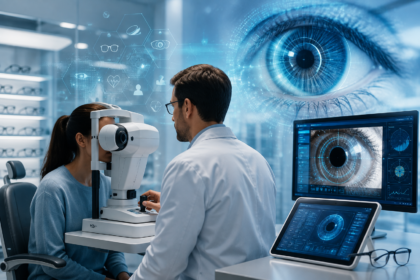
Eye care is undergoing one of its most significant transformations in decades. Advances in imaging, artificial intelligence, genetics, and surgical technology are converging to reshape how eye diseases are detected, treated, and managed. Understanding the emerging trends in ophthalmic healthcare is essential for practitioners, researchers, and patients who want to stay ahead of a rapidly changing field.

Contents
Why Emerging Trends in Ophthalmic Healthcare MatterAI-Powered Diagnostics and ScreeningKey Advantages of AI in Eye CareGene Therapy and Precision TreatmentMinimally Invasive Surgical InnovationAdvanced Imaging and 3D Retinal MappingTeleophthalmology and Remote Eye CareSmart Contact Lenses and Wearable MonitoringChallenges Facing Ophthalmic InnovationWhat This Means for Patients and ProvidersFinal Thoughts

This article takes a deep dive into the innovations currently driving change in ophthalmology, why they matter, and what they suggest about the future of vision care.

Why Emerging Trends in Ophthalmic Healthcare Matter

Vision impairment affects hundreds of millions of people worldwide, and demand for specialized eye care continues to grow alongside aging populations and rising rates of chronic conditions like diabetes. At the same time, the emerging trends in ophthalmic healthcare are helping the field respond more effectively, enabling earlier diagnosis, more precise treatment, and better long-term outcomes.

These developments matter because early detection often determines whether vision loss can be prevented or only managed. Faster, more accurate tools give both clinicians and patients a real advantage in preserving sight.

AI-Powered Diagnostics and Screening

Artificial intelligence has quickly become one of the most influential emerging trends in ophthalmic healthcare. AI-driven software can now analyze retinal scans to identify early signs of diabetic retinopathy, glaucoma, and age-related macular degeneration, often before a patient notices any symptoms.

Key Advantages of AI in Eye Care

  • Earlier detection: Algorithms can catch subtle retinal changes that may be missed during a routine exam.
  • Scalable screening: AI tools make large-scale vision screening programs more feasible, particularly in underserved regions.
  • Consistency: Automated analysis reduces variability between different examiners and clinics.
  • Support, not replacement: AI is increasingly used to flag cases for specialist review, helping ophthalmologists prioritize urgent cases.

Gene Therapy and Precision Treatment

One of the most promising emerging trends in ophthalmic healthcare is the rise of gene therapy for inherited retinal diseases. Conditions that were once considered untreatable are now being addressed at the genetic level, with therapies designed to correct or compensate for specific mutations that cause vision loss.

This shift toward precision medicine means treatment can increasingly be tailored to a patient’s specific genetic profile, rather than relying solely on broad, one-size-fits-all approaches. While still an emerging field, early results in conditions like inherited retinal dystrophies have generated significant optimism within the ophthalmology community.

Minimally Invasive Surgical Innovation

Surgical techniques in ophthalmology continue to evolve toward smaller incisions, faster recovery times, and greater precision. Advances such as femtosecond laser-assisted cataract surgery and microinvasive glaucoma surgery reflect a broader trend within emerging trends in ophthalmic healthcare: reducing trauma to the eye while improving surgical accuracy.

These techniques often allow patients to return to normal activity more quickly, with fewer complications compared to traditional surgical approaches.

Advanced Imaging and 3D Retinal Mapping

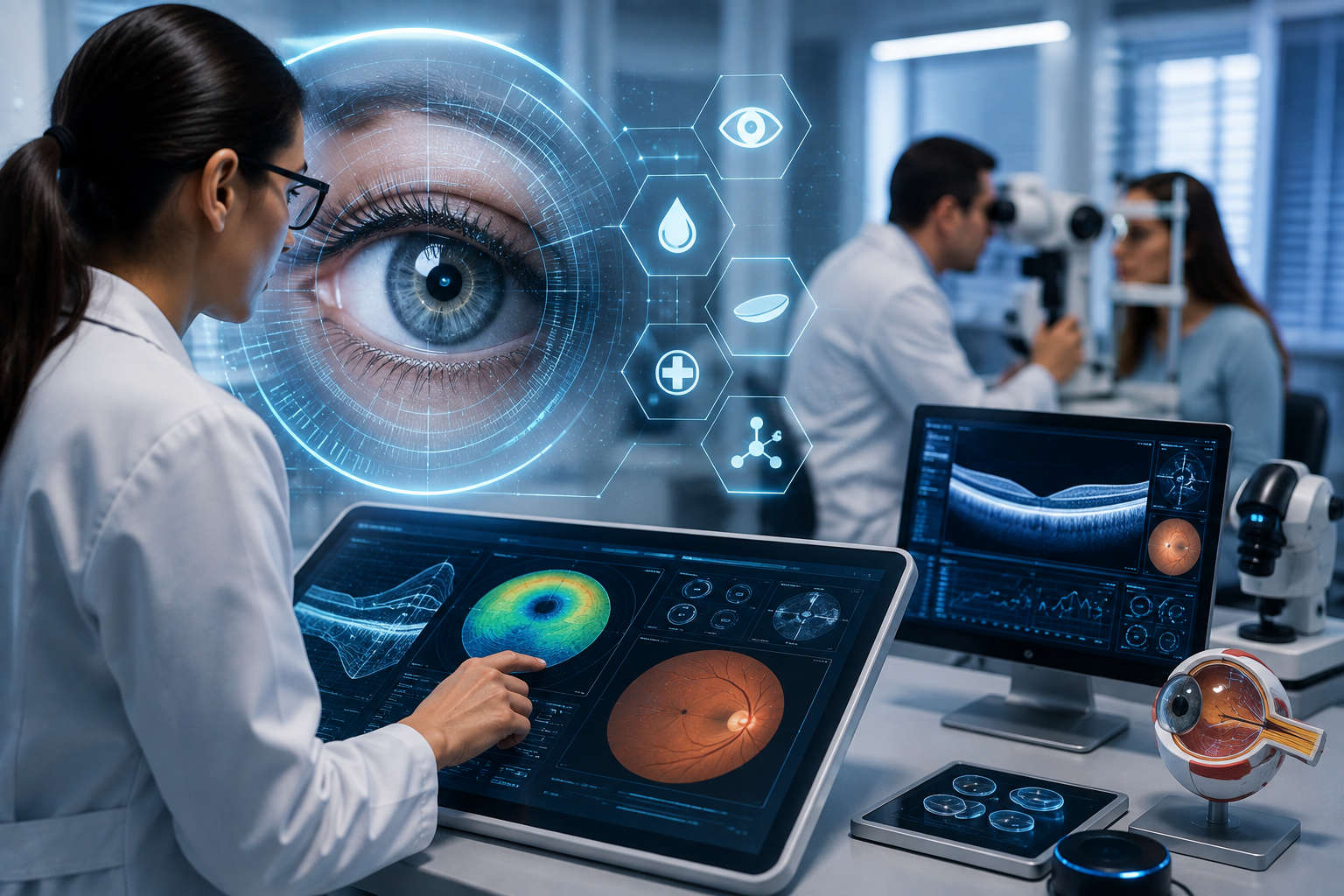
Optical coherence tomography, often referred to as OCT, has become a cornerstone of modern eye examinations. This technology allows clinicians to capture detailed, cross-sectional images of the retina, revealing structural changes long before they would be visible through a standard exam.

Continued refinement of imaging resolution and speed is one of the more technical but impactful emerging trends in ophthalmic healthcare, giving practitioners a far more complete picture of eye health in a single, non-invasive visit.

Teleophthalmology and Remote Eye Care

Remote healthcare delivery has expanded significantly across medicine, and ophthalmology is no exception. Teleophthalmology platforms now allow preliminary screenings, particularly for diabetic retinopathy, to be conducted remotely, with results reviewed by specialists who may be located far from the patient.

This trend is especially valuable in rural or underserved areas where access to a specialized eye care provider has historically been limited. It also allows in-person clinics to focus their resources on patients who require hands-on examination or treatment.

Smart Contact Lenses and Wearable Monitoring

Among the more forward-looking emerging trends in ophthalmic healthcare is the development of smart contact lenses designed to monitor conditions like glaucoma in real time. These lenses aim to track intraocular pressure continuously, offering a far more complete picture than the periodic measurements taken during a typical office visit.

Wearable monitoring technology reflects a broader shift in healthcare: moving from episodic checkups toward continuous, real-time data that can catch problems earlier and guide more responsive treatment.

Challenges Facing Ophthalmic Innovation

Despite considerable progress, several challenges continue to shape how these emerging trends in ophthalmic healthcare are adopted in real-world practice:

  1. Cost and accessibility: advanced diagnostic and surgical technology often requires significant investment, limiting access in lower-resource settings.
  2. Regulatory approval: gene therapies and novel devices must clear rigorous safety and efficacy standards before widespread use.
  3. Training and adoption: clinicians need time and support to integrate new tools effectively into existing workflows.
  4. Long-term data: many newer treatments, particularly gene therapies, still require longer follow-up periods to confirm lasting safety and effectiveness.

What This Means for Patients and Providers

For patients, these emerging trends in ophthalmic healthcare translate into earlier diagnosis, less invasive treatment options, and greater access to specialized care, even outside major cities. For providers, they offer more precise diagnostic tools and a growing range of treatment options tailored to individual patient needs.

Final Thoughts

The pace of innovation across emerging trends in ophthalmic healthcare shows no signs of slowing. From AI-assisted diagnostics and gene therapy to minimally invasive surgery and remote screening, these developments are making eye care more precise, more accessible, and more personalized than at any point in the field’s history.

As these technologies continue to mature and gain wider adoption, both patients and practitioners stand to benefit from a future where preserving vision is easier, earlier, and increasingly tailored to the individual.


Stay connected with Business Herald for the latest business news, insights, and updates.

Follow us on Facebook, Instagram, LinkedIn, and YouTube.

Join our growing community on WhatsApp and Telegram for real-time updates delivered directly to you.

Business Herald
Business Herald
TAGGED:AI in healthcareeye care innovationgene therapyhealthcare trendsophthalmologyretinal imagingsmart contact lensesteleophthalmologyvision care technology
SOURCES:rubynews.comtimenews.com
VIA:ThemeRubyMarsNews
Share This Article
Facebook Copy Link Print
Leave a Comment

Leave a Reply Cancel reply

Your email address will not be published. Required fields are marked *

Let's Connect

304.9kLike
3.04MFollow
304.9kPin
844.87MFollow
40.49MSubscribe
39.5kFollow

Popular Posts

KakaoAI restructuring

KakaoAI Restructuring Splits Kakao Into Platform and Investment Arms

Neeraj Kapoor
14 Min Read
Founders redesigning company culture as employees, teams and international offices expand.

Why Founders Must Redesign Company Culture as They Scale

Business Herald
28 Min Read

Beyond Numbers, Exploring the Intricate Patterns of the Universe

Business Herald
24 Min Read
Bluetooth indoor positioning system

Bluetooth Technology Works in Tandem for Indoor Positioning System

Business Herald
17 Min Read

You Might Also Like

Manage multiple credit cards
Tech

5 Ways to Manage Your Spending on Multiple Credit Cards

13 Min Read
Golden sandy beach along the UK coastline with clear blue water
Tech

Best beaches in the UK for the Perfect Sandy Getaway

Sponsored by
Sponsored by
digital marketing website for service business
Tech

Start a Digital Marketing Website for your Service

16 Min Read
India pharmaceutical industry manufacturing and quality control
Healthcare

Why India’s Pharmaceutical Industry May Miss Its $130 Billion 2030 Target

23 Min Read

Follow Us On Our Social Networks

Facebook-f Youtube Instagram Linkedin

© 2026 Business Herald, an autonomous subsidiary of Hindustan Herald. All rights reserved.

BH Light

Trusted business journalism, leadership insights, and stories shaping the future of enterprise.

Important Links

  • About Us
    • Editorial Team
    • Our Mission
    • Our Vision
    • Career
    • Contact Us
  • Editorial
    • Editorial Policy
    • Ethics Policy
    • Fact-Checking Policy
    • Corrections Policy
    • AI Usage Policy
  • About Us
    • Editorial Team
    • Our Mission
    • Our Vision
    • Career
    • Contact Us
  • Editorial
    • Editorial Policy
    • Ethics Policy
    • Fact-Checking Policy
    • Corrections Policy
    • AI Usage Policy

© 2026 Business Herald, an autonomous subsidiary of Hindustan Herald. All rights reserved.

Follow Us On Our Social Networks

Facebook-f Youtube Instagram Linkedin
Welcome Back!

Sign in to your account

Username or Email Address
Password

Lost your password?