

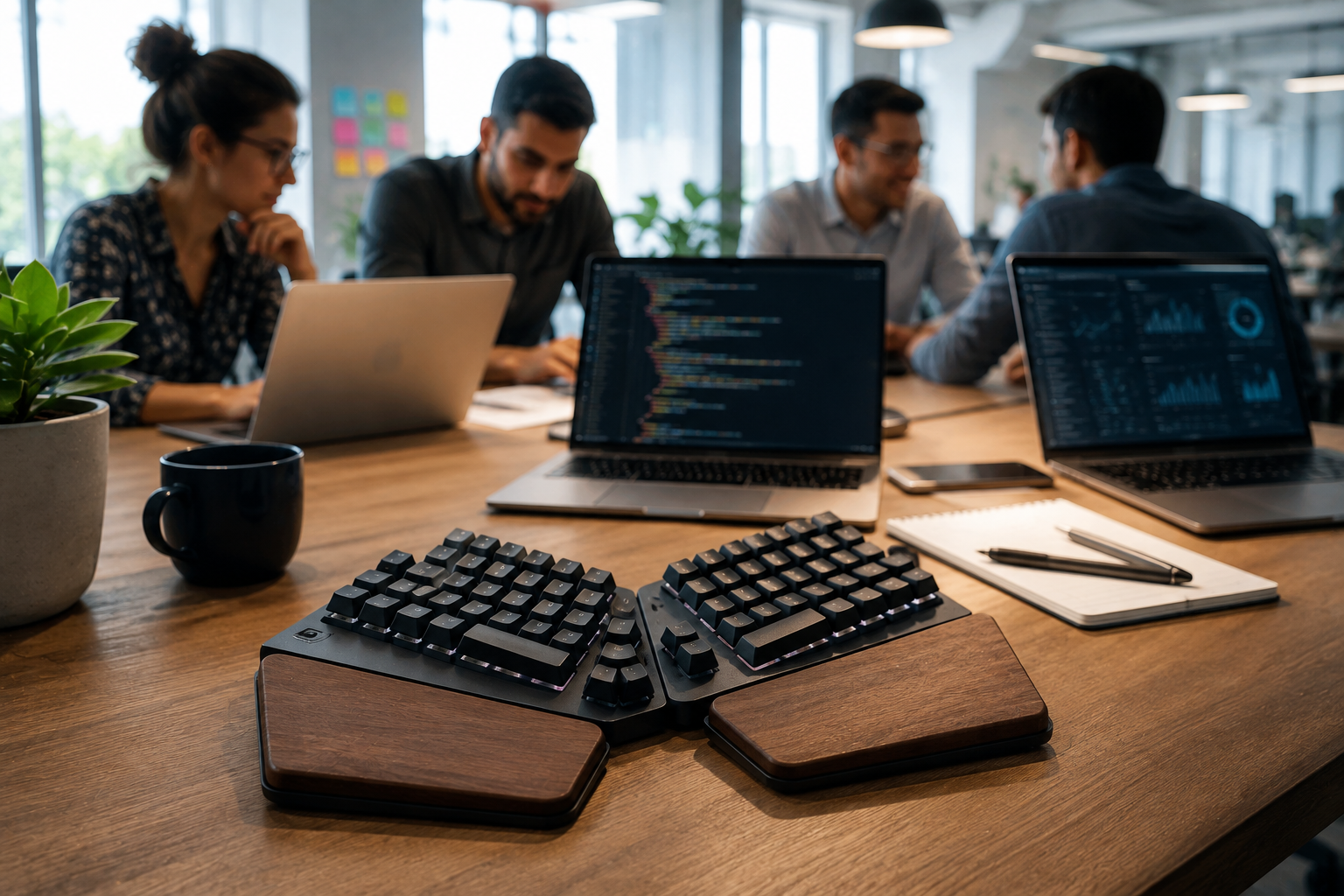

For decades, the standard keyboard layout has remained largely unchanged, even as the way we work has transformed dramatically. Now, a new keyboard startup is challenging the status quo with an innovative keyboard layout designed specifically to improve typing speed, reduce physical strain, and support long-term productivity for modern workers.
This article looks at what makes this new design different, why keyboard innovation matters more than people realize, and what it could mean for the future of how we type.
Why an Innovative Keyboard Layout Matters Today
Most people still use a keyboard layout that was designed over a century ago for mechanical typewriters, not for the demands of modern computing. As remote work, coding, and content creation have become central to daily life, the limitations of traditional layouts have become harder to ignore.
An innovative keyboard layout addresses several long-standing pain points:
- Repetitive strain injuries are caused by awkward finger movement patterns.
- Reduced typing efficiency due to poorly placed high-frequency keys.
- Fatigue during long work sessions, especially for writers, developers, and data professionals.
- Limited adaptability for users with different hand sizes or physical needs.
By rethinking how keys are arranged, this new approach aims to solve problems that traditional keyboards were never designed to address.
What Makes This New Layout Different
Unlike incremental updates seen in most consumer keyboards, this startup’s innovative keyboard layout rebuilds the typing experience from the ground up. Rather than following the familiar QWERTY arrangement, the design prioritizes finger movement efficiency, key placement based on real usage data, and ergonomic comfort.
Key Design Features
- Optimized key placement: Frequently used letters are positioned to minimize unnecessary finger travel.
- Split and curved design: Reduces wrist strain by aligning with natural hand positioning.
- Adaptive key mapping: Allows users to customize layouts based on their specific workflow, whether coding, writing, or gaming.
- Lightweight, responsive switches: Designed to reduce fatigue during extended typing sessions.
Together, these features reflect a broader trend in hardware design: prioritizing human comfort and efficiency over legacy standards.
The Productivity Case for Rethinking Keyboards
Productivity tools often focus on software, apps, and workflow systems, while the physical hardware people interact with every day is frequently overlooked. This innovative keyboard layout challenges that assumption by treating the keyboard itself as a productivity lever, not just a neutral input device.
Early testers of similar ergonomic and optimized layouts have reported measurable benefits, including:
- Faster typing speeds after an initial adjustment period.
- Noticeably reduced hand and wrist fatigue during long work sessions.
- Fewer typing errors due to more intuitive key placement.
- Improved comfort for users who spend most of their day at a keyboard.
For professionals who type for hours at a time, even small efficiency gains can add up to meaningful time savings and reduced physical strain over months and years.
Challenges Facing New Keyboard Layouts
Despite its potential, introducing an innovative keyboard layout into a market dominated by decades-old habits isn’t without obstacles. Adoption challenges include:
- The learning curve: Users accustomed to traditional layouts often need time to adjust.
- Muscle memory: Years of QWERTY typing habits can slow the transition process.
- Market skepticism: Consumers are often cautious about hardware that deviates from familiar standards.
- Compatibility concerns: New layouts must work seamlessly across operating systems and existing software.
Overcoming these barriers typically requires clear onboarding support, gradual transition tools, and strong evidence of long-term benefits.
Who Stands to Benefit Most
While any typist could benefit from a more efficient layout, certain groups are especially likely to see meaningful improvements from this innovative keyboard layout:
- Software developers type complex syntax for hours each day.
- Writers and content creators who rely on speed and accuracy for long-form work.
- Data entry professionals, where small efficiency gains compound significantly over time.
- Remote workers often lack access to ergonomic office setups.
The Bigger Picture: Hardware Innovation in a Software-Focused World
Much of today’s innovation conversation centers on software and AI, but this launch is a reminder that meaningful productivity gains can also come from rethinking physical tools we use every day. An innovative keyboard layout represents a broader shift toward human-centered hardware design, where comfort, efficiency, and long-term well-being are treated as design priorities rather than afterthoughts.
Final Thoughts
This keyboard startup’s approach signals a growing appetite for rethinking tools that have gone largely unquestioned for generations. By focusing on ergonomics, efficiency, and real-world typing patterns, this innovative keyboard layout offers a compelling case for why productivity improvements don’t always come from new software. Sometimes, they start with the hardware right under our fingertips.
As remote work and digital-first careers continue to grow, expect more startups to follow this lead, questioning long-held design assumptions in pursuit of tools that genuinely support how people work today.
Stay connected with Business Herald for the latest business news, insights, and updates.
Follow us on Facebook, Instagram, LinkedIn, and YouTube.
Join our growing community on WhatsApp and Telegram for real-time updates delivered directly to you.