
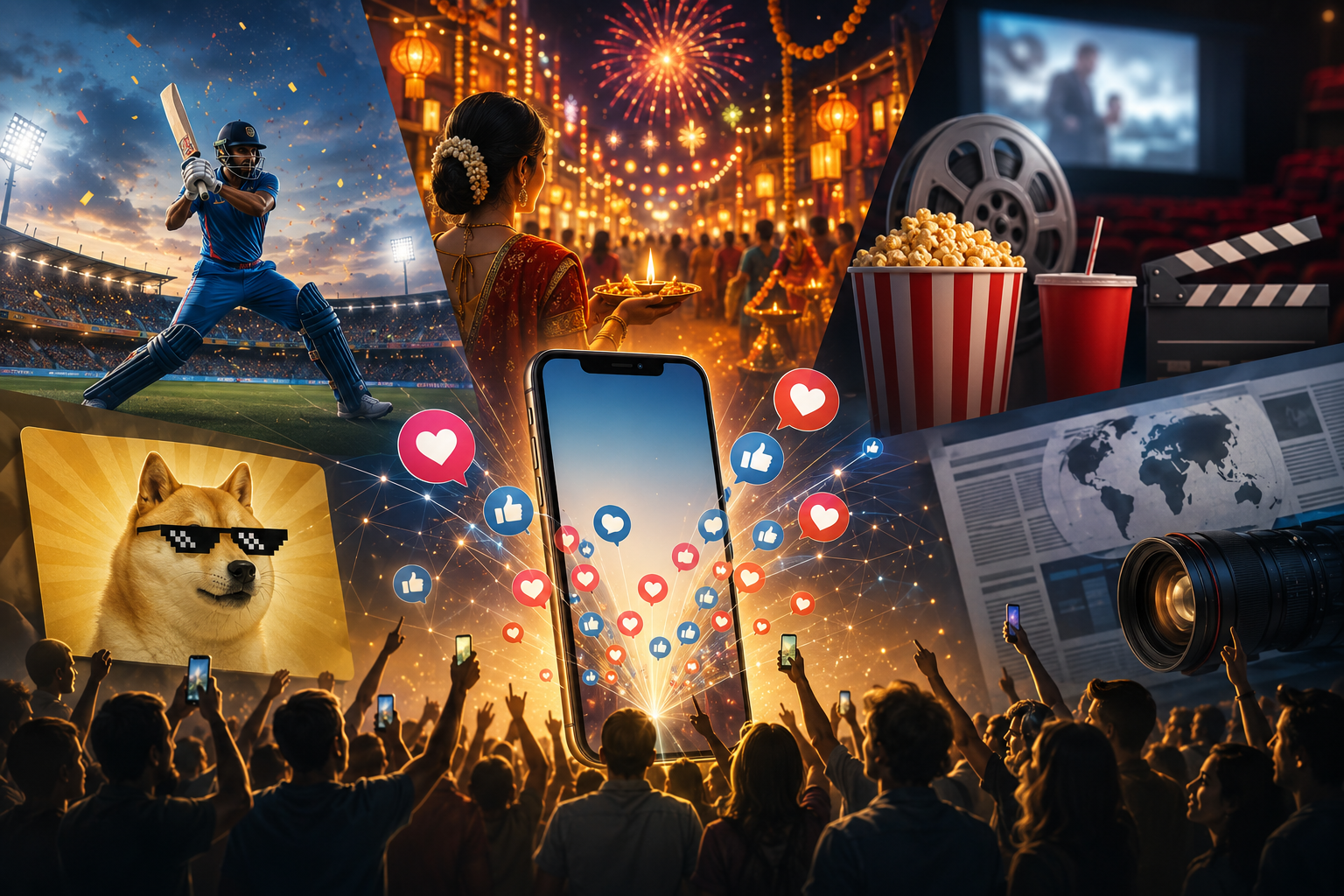

A sporting victory, festival, blockbuster film, internet meme, or breaking-news event can place a brand before millions of consumers within hours. But visibility alone does not create business value. Likes, views, and online mentions become commercially meaningful only when companies connect cultural attention with products, distribution, customer data, and a measurable purchasing action.
This is the central challenge of a successful viral marketing strategy. Brands must move quickly enough to participate in the conversation without appearing forced, insensitive, or disconnected from their identity. They must also ensure that products are available, digital journeys are functional, and marketing teams can measure whether engagement generated incremental sales.
For companies operating in India’s highly competitive consumer economy, the opportunity is significant. Cricket, festivals, cinema, regional culture, creator communities, and short-form video offer brands repeated opportunities to capture public attention. The winners, however, are not always the companies that achieve the highest reach. They are the businesses that build the strongest commercial infrastructure behind the moment.
Why Culture Has Become Valuable Media Inventory
India’s advertising market is becoming increasingly digital, measurable, and culturally responsive. The country’s advertising industry crossed ₹1 lakh crore in FY25, with digital media accounting for nearly 46% of total expenditure. Social platforms represented an estimated 40% to 45% of digital advertising spending, supported by short-form video and creator-led campaigns.
This shift has changed how brands approach popular culture.
Companies no longer need to wait for a television commercial, print advertisement, or month-long media plan to join a national conversation. Marketing teams can respond to a cricket victory, film release, celebrity moment, or viral meme within minutes.
But speed has also increased competition. Hundreds of brands may attempt to respond to the same event, producing similar posts, jokes, and promotional offers. Most disappear from public attention almost immediately.
Commercially successful cultural marketing generally requires four connected elements:
Relevance, which gives the brand permission to enter the conversation.
Reach, which distributes the message beyond existing followers.
Transaction, which gives consumers an immediate action to take.
Retention converts temporary interest into a longer customer relationship.
Without the last two elements, virality largely remains a communications outcome rather than a business outcome.
Sporting Events: Fandom Can Influence Purchase Decisions
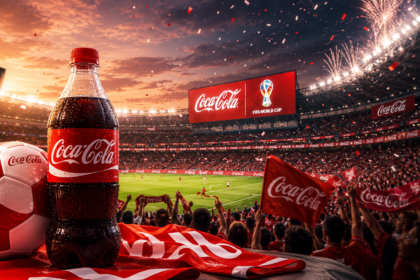
Sport is one of the most powerful cultural assets available to marketers because it combines live attention, emotional loyalty, and recurring engagement.
India’s sports economy reached ₹18,864 crore in 2025, crossing the $2 billion threshold for the first time, according to WPP Media. Cricket represented 89% of the market, generating ₹16,704 crore. Sports advertising expenditure increased 19.8% to ₹9,571 crore, while sponsorship spending rose 7% to ₹7,943 crore. Digital sports advertising grew faster than television, rising 24% to ₹4,449 crore.
The commercial value goes beyond visibility. Nielsen found that 61.1% of cricket fans in India would prefer a sponsoring brand when price and quality were comparable, against 56.7% of the wider population. It also found that 64.7% of Indian cricket fans reported stronger sponsor recall, while 58.1% actively sought information about brands associated with sport.
As WPP Media executive Vinit Karnik observed, “Sport today sits at the intersection of culture and commerce.”
The most valuable sports campaigns therefore move beyond logo placement. They integrate athletes, teams and tournaments into product launches, digital content, fan experiences, loyalty programmes and retail promotions.
Nike’s 2018 campaign featuring former NFL quarterback Colin Kaepernick demonstrated how a sports-related cultural debate could generate commercial impact when aligned with an established brand identity.
The campaign triggered boycott calls and an initial decline in social sentiment. However, Reuters reported that Nike sold 61% more merchandise during the ten days following the campaign than during the preceding ten-day period. The company discounted fewer products; its shares recovered from the initial decline and were nearly 7% higher shortly afterwards.
Nike benefited because the campaign was consistent with its long-standing positioning around ambition, athletes, and personal conviction. A similarly polarising campaign from a brand without that history could have appeared opportunistic.
The lesson for Indian companies investing in cricket, football, kabaddi, or emerging sports is clear: sponsorship works best when the brand has a commercial plan for the audience before, during, and after the event.
Festivals: Turning Shared Tradition Into Local Commerce
Festivals are different from spontaneous viral events because they are predictable. Companies know when consumer interest will increase, which product categories are likely to benefit, and how shopping behaviour may change.
That makes festive marketing less dependent on improvisation and more dependent on localisation, inventory planning and distribution.
Google and Kantar research previously found that 93% of Indian consumers used both online and offline channels while gathering information before a purchase. Even among rural shoppers, seven in ten used online touchpoints despite 85% of final purchases taking place offline.
More recent Google and Ipsos research conducted during the 2023 Navratri–Diwali season found that 87% of Indian consumers watched YouTube or YouTube Shorts during their shopping journey.
This creates a major opportunity for brands capable of linking digital inspiration with nearby stores, available products, and simple purchase journeys.
Cadbury Celebrations demonstrated this through its Shah Rukh Khan-My-Ad campaign. Machine learning was used to create hyperlocal advertisements in which the actor appeared to promote nearby small businesses during Diwali.
According to WPP, 130,000 advertisements were created featuring 2,000 grocery, electronics, jewellery, apparel, furniture, and other retailers. The campaign generated 94 million views across YouTube and Facebook, while a microsite allowed business owners to create and distribute personalised versions featuring their own store names.
The campaign succeeded because it offered more than emotional storytelling. It created commercial utility for local retailers, gave consumers locally relevant recommendations, and connected Cadbury with the broader festive shopping economy.
Hero MotoCorp used a similarly measurable approach. A Google-powered local campaign promoting dealership locations and operating information during the festive period generated approximately 126,000 store visits and 67,000 telephone calls.
For investors and business leaders, these examples demonstrate why festive marketing should not be evaluated solely through video views. Store visits, calls, leads, product searches, dealer enquiries, and incremental sales provide a more meaningful assessment of financial value.
Films: When Entertainment Becomes a Commercial Ecosystem
A successful film can create demand across multiple industries, including fashion, food, travel, beauty, toys, gaming, and retail.
The 2023 Barbie film became one of the clearest examples of a company treating entertainment as a platform for intellectual-property monetisation rather than as a standalone promotional event.
Mattel announced more than 100 brand partners across fashion, beauty, accessories, and other consumer categories connected with the film.
The film generated more than $1.38 billion at the worldwide box office and became the highest-grossing release in Warner Bros.’ 100-year history at the time.
Mattel’s regulatory filing later reported that Barbie gross billings increased 2% in 2023, driven primarily by licensing revenue associated with the movie. The company described the film as part of its strategy to expand its intellectual property across content, consumer products, and entertainment.
The central business lesson was not simply that the film went viral.
The movie created a common visual language—pink, nostalgia, fashion, and self-expression—that partners could translate into products, experiences, and social content. Each commercial collaboration expanded the campaign’s reach, while the film increased consumer interest in the products.
This created a reinforcing cycle:
The film generated cultural attention.
Cultural attention increased partner participation.
Partner activity expanded the film’s visibility.
Expanded visibility supported ticket sales, licensing, and merchandise.
For media and consumer companies, the Barbie model demonstrates how intellectual property can become a multi-industry growth platform. The strongest entertainment properties are no longer monetised only through box-office collections. They can generate licensing fees, consumer-product revenue, digital engagement and long-term franchise value.
Memes: Consumer Participation Can Become Distribution
Memes are commercially attractive because audiences distribute them voluntarily. Consumers are no longer passive recipients of an advertising message; they become creators, remixers, and distributors.
However, brands cannot fully control how a meme develops.
McDonald’s experienced this with the Grimace Birthday Meal and the purple Grimace Shake launched in the United States in June 2023. TikTok users transformed the promotion into an absurd horror-style meme in which consumers appeared to suffer dramatic consequences after drinking the shake.
Instead of attempting to remove or over-manage the content, McDonald’s acknowledged the trend in the same playful tone.
During the quarter, McDonald’s reported global comparable sales growth of 11.7%, with US comparable sales rising 10.3%. Consolidated revenue increased 14% to approximately $6.5 billion. Chief Executive Chris Kempczinski highlighted the company’s ability to “create cultural conversations.”
Importantly, McDonald’s did not attribute the entire increase to the Grimace phenomenon. Its financial release cited menu-price increases, guest growth, digital channels, delivery, and culturally relevant campaigns as contributors.
That distinction matters.
A viral meme may support sales, but the precise contribution should not be confused with total company growth. The product must be widely available, affordable, and easy to order before internet attention can become transaction volume.
For Indian food delivery, quick-commerce, and consumer brands, meme marketing can be valuable because these businesses already have immediate purchase infrastructure. A consumer can see a post, open an app and complete an order within minutes.
Brands without this transaction layer may receive significant attention without any equivalent improvement in revenue.
Breaking News: Speed Creates Attention, Not Guaranteed Sales
Real-time marketing became a boardroom subject after Oreo’s response to the power outage during the 2013 Super Bowl.
When stadium lights went out for 34 minutes, Oreo published its “dunk in the dark” post. The message received nearly 15,000 retweets and more than 20,000 Facebook likes. The company had a 15-person social media team, including copywriters, strategists, and artists, prepared to respond during the game.
The campaign is frequently presented as proof that speed wins cultural attention. But the original reporting also contained a critical qualification: Mondelēz could not immediately determine whether the post increased Oreo sales.
In other words, Oreo won the conversation, but the direct revenue outcome was uncertain.
India’s Amul offers a different model. Its topical advertising format dates back to 1966 and has used recurring visual identity, humour, wordplay, and current affairs to maintain recognition across generations. Rather than treating each news event as an isolated viral opportunity, Amul developed a repeatable cultural format associated permanently with the brand.
The comparison highlights two distinct strategies.
Oreo captured an unexpected event through operational speed.
Amul created a long-term brand asset through consistency.
Both approaches can generate attention. However, long-term commercial value is more likely when cultural relevance strengthens an identifiable and defensible brand property.
The Commercial Architecture Behind a Viral Campaign
Brands seeking measurable returns from cultural moments require more than a responsive social media team. They need an operating structure capable of converting attention into action.
1. Establish Brand–Moment Fit
A company should participate only when the event connects naturally with its product, customer base, or established brand identity.
Sportswear brands have a credible role in athletic conversations. Food brands can enter festival and entertainment moments. Financial companies may participate in entrepreneurship, investment or major economic discussions.
Weak connections make campaigns appear forced. Worse, they can make a company appear to be exploiting a serious event for commercial attention.
2. Build Decision Speed Before the Moment Arrives
Oreo responded quickly because its creative, agency, and approval teams were already available.
Fast execution requires predefined decision rights, legal guidelines, creative templates, and escalation procedures. Without them, the cultural moment may end before the campaign receives approval.
Technology can accelerate production, but it does not replace judgement. Artificial intelligence may generate several versions of a message, while people must still assess context, accuracy, sensitivity, and reputational risk.
3. Attach an Immediate Commercial Action
Every campaign should answer one question: what should the audience do next?
Possible actions include purchasing a limited-edition product, visiting a store, downloading an application, scanning a QR code, joining a loyalty programme, booking an experience, or sharing contact information.
The shorter the distance between cultural attention and transaction, the greater the possibility of commercial conversion.
4. Prepare Inventory and Distribution
Virality can become a liability when demand cannot be fulfilled.
A brand that creates interest without adequate stock may lose sales to competitors. It may also frustrate consumers and damage trust.
Before activating a major sporting, festive, or entertainment campaign, companies should coordinate marketing forecasts with manufacturing, retail, logistics, and customer support.
5. Amplify Organic Attention Strategically
Organic reach is unpredictable and usually temporary. Brands can extend a successful cultural response through paid media, creators, public relations, retail displays, email, search marketing, and regional-language content.
The objective is not simply to repeat the viral post. It is to move different customer groups through the purchasing journey.
6. Measure Incremental Business Value
Views and engagement rates remain useful indicators, but they are incomplete.
A stronger measurement framework should track:
- Increase in branded search volume
- Website and application traffic
- Store visits and telephone enquiries
- Conversion rates and incremental units sold
- Customer-acquisition cost
- Average order value and gross margin
- New-customer versus existing-customer purchases
- Repeat purchases after the campaign
- Brand consideration and sponsor recall
Where possible, companies should use control markets, matched audiences, promotional codes,s or incrementality testing to determine how much activity would have occurred without the campaign.
When Cultural Marketing Goes Wrong
The speed of internet culture creates substantial reputational and financial risk.
Brands can face criticism for commenting on tragedies, political conflicts, or sensitive social issues without sufficient understanding. Film and sports references may create intellectual-property or sponsorship conflicts. Automated content may misinterpret language, imagery, or cultural context.
There is also a danger of brand dilution. A company that reacts to every meme can begin to look inconsistent or desperate for attention.
The strongest organisations maintain clear boundaries. They distinguish between celebratory moments, harmless entertainment, and events involving human suffering.
Not every trending topic is a marketing opportunity.
What This Means for Indian Businesses
India combines a large digital audience, strong regional identities, a festival-driven retail calendar, deep film culture, and one of the world’s most valuable cricket economies.
That creates significant opportunities for FMCG companies, automobile manufacturers, e-commerce platforms, quick-commerce businesses, banks, fintech firms, entertainment companies, and direct-to-consumer brands.
The next phase of cultural marketing in India is likely to become more localised and more transactional. Artificial intelligence can help companies create campaigns across languages, cities, and customer segments. Creator networks can provide cultural credibility. Digital commerce can reduce the distance between discovery and purchase.
But technology alone will not create an advantage. Competitors will have access to similar tools.
The durable advantage will come from superior judgement, faster decision-making, distinctive brand assets, better distribution, and stronger customer data.
The Bottom Line
Cultural moments are not a substitute for business fundamentals. They are accelerators.
They can increase visibility, reduce the cost of distribution, improve brand recall, and create extraordinary bursts of demand. But they cannot compensate for an irrelevant product, weak supply chain, poor customer experience, or unclear commercial objective.
The businesses that consistently convert culture into revenue treat virality as part of a broader operating system.
They prepare before the moment appears.
They participate with relevance rather than desperation.
They connect attention to a product or action.
And they measure success in customers, sales, and long-term brand value, not merely in likes.
Going viral may place a brand inside the conversation. Building the commercial infrastructure behind that conversation is what turns culture into business.
Stay connected with Business Herald for the latest business news, insights, and updates.
Follow us on Facebook, Instagram, LinkedIn, and YouTube.
Join our growing community on WhatsApp and Telegram for real-time updates delivered directly to you.