

A sudden change at the top of a major defence contractor usually makes investors nervous. At L3Harris Technologies, however, the circumstances are particularly unusual.
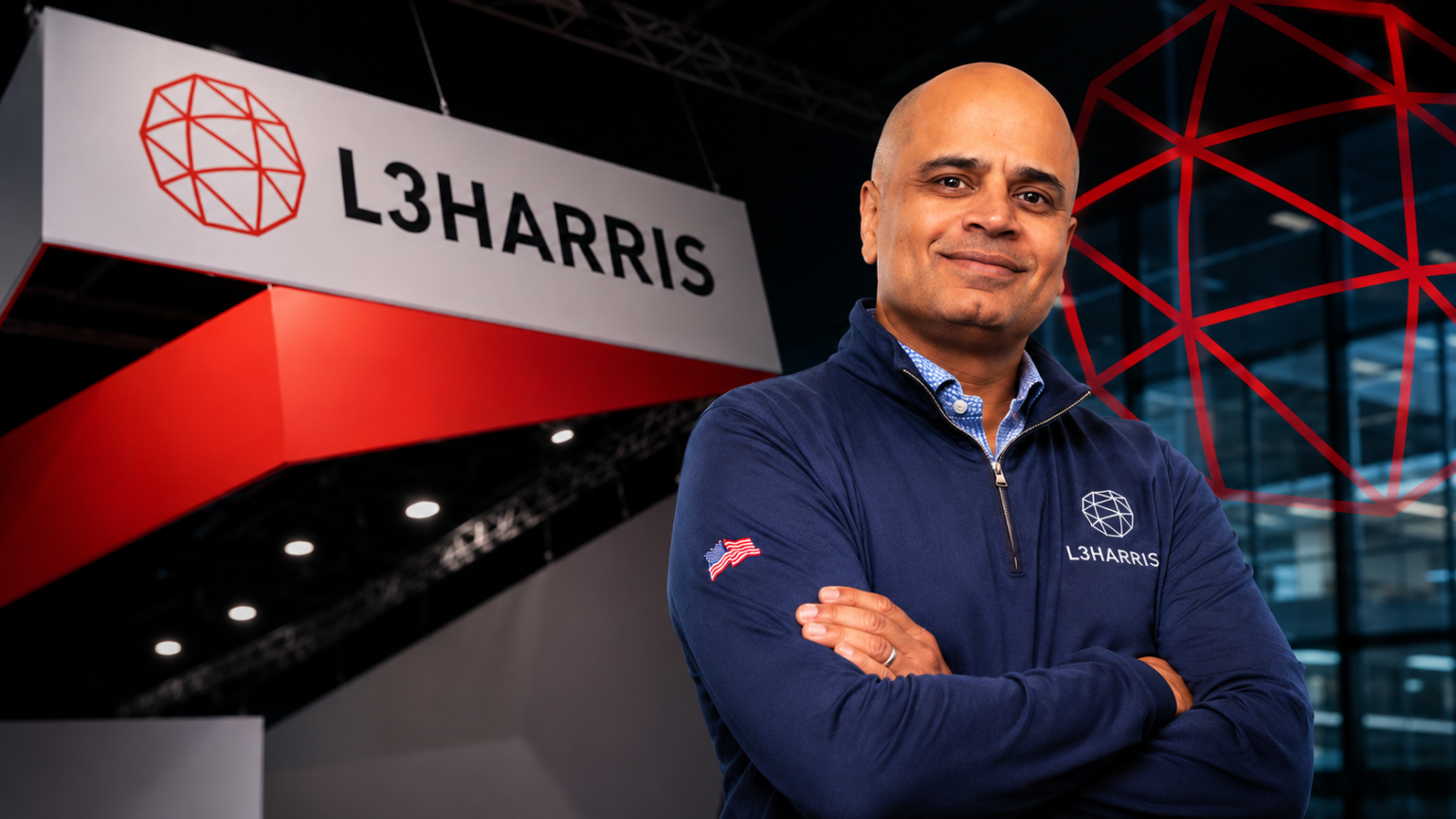
The company has replaced Chairman and Chief Executive Christopher Kubasik with longtime aerospace executive Sam Mehta, effective immediately, after an investigation by independent members of its board found Kubasik had engaged in conduct inconsistent with the company’s values and Code of Conduct.
Importantly, L3Harris says the matter was not connected to its financial reporting, internal controls, customer relationships or operating performance. The company has also reaffirmed its financial outlook for 2026.
That distinction matters. This is, at least based on what the company has disclosed, a corporate governance and leadership issue rather than an operational or financial crisis.
Still, for investors, employees and customers of one of America’s largest defence technology companies, an abrupt CEO departure inevitably brings questions about continuity, culture and what happens next.
What Happened in the L3Harris CEO Change?
L3Harris announced on August 17 that Kubasik had stepped down as chairman, CEO, and a member of the board.
According to the company’s filing with the U.S. Securities and Exchange Commission, independent board members conducted an investigation with the assistance of independent counsel. The board concluded that Kubasik had engaged in conduct that was inconsistent with L3Harris’s stated values.
L3Harris has not publicly disclosed the specific nature of the conduct, and Kubasik did not immediately respond to Reuters’ request for comment. That leaves an important boundary around the story: anything beyond the company’s disclosure would be speculation.
Lewis Hay III, who has moved from lead independent director to independent chairman, acknowledged Kubasik’s role in transforming the company but said that “our values guide the actions we take each day.”
The board, in other words, chose to act even though it said the underlying matter had no impact on the company’s financial or operational performance.
Christopher Kubasik Leaves Without Severance
The terms of Kubasik’s departure add weight to the significance of the board’s decision.
Under his separation agreement, Kubasik will not receive severance payments, additional benefits or equity incentive awards, although he can retain and exercise certain stock options that had already vested.
Kubasik had been central to the creation of the modern L3Harris.
He helped steer the 2019 merger between L3 Technologies and Harris Corporation, initially serving as president and chief operating officer of the combined group. He became CEO in 2021 and chairman the following year.
His tenure also included the company’s $4.7 billion acquisition of Aerojet Rocketdyne in 2023, a deal that significantly expanded L3Harris’s presence in missile propulsion and other strategically important defence technologies.
Reuters also noted that Kubasik had previously left Lockheed Martin in 2012 after acknowledging an improper relationship with a subordinate, shortly before he was expected to become CEO. There is no disclosed evidence linking that earlier episode to the conduct investigated by L3Harris, and the company has not provided details of its current investigation.
Who is the new L3Harris CEO, Sam Mehta?
The speed of the succession is notable. Rather than appointing an interim leader and beginning an external search, L3Harris immediately promoted Sam Mehta, suggesting the board already had an established succession option inside the company.
Mehta, 53, has more than 25 years of aerospace and defence experience. He joined L3Harris in January 2023 as president of its Communication Systems segment. In March 2026, he took responsibility for the company’s Space & Mission Systems and Communications & Spectrum Dominance businesses.
Those two divisions account for more than 80% of L3Harris’s total revenue, meaning Mehta enters the CEO position with direct experience overseeing most of the company’s core business.
He had responsibility for businesses employing nearly 34,000 people across areas including space systems, secure communications, electronic warfare, sensing, and mission-critical defence technologies.
Before joining L3Harris, Mehta led Advanced Structures at Collins Aerospace, part of RTX. Earlier, he spent more than 17 years at Sikorsky Aircraft, including leadership of a $4 billion military products and services business.
That background makes the L3Harris CEO change less disruptive operationally than an outside appointment might have been.
Mehta has signalled continuity rather than a strategic reset, describing L3Harris as having a portfolio “purpose-built for the future of warfare.”
L3Harris Enters the Transition From a Position of Financial Strength
The timing is particularly interesting because L3Harris is not changing leadership in the middle of weak operating results.
Less than three weeks before Kubasik’s departure, the company reported a strong second quarter.
Revenue rose 8% year over year to $5.88 billion, while orders reached $7.3 billion. Its backlog climbed to a record $42 billion, giving the company substantial visibility into future demand.
Operating income reached $654 million and diluted earnings per share increased 28% to $3.13. Free cash flow for the quarter rose 37% to $771 million.
L3Harris had actually raised parts of its 2026 guidance in July, putting expected full-year revenue at $23.2 billion to $23.7 billion, compared with its previous range of $23 billion to $23.5 billion. It projected diluted GAAP earnings per share of $11.80 to $12.00 and free cash flow of about $3 billion.
Following the leadership announcement, the company explicitly reaffirmed its outlook for revenue, organic growth, segment operating margin, earnings and free cash flow.
For investors, that reassurance is important. It tells the market that the board does not currently expect Kubasik’s departure to disrupt contracts, financial controls or execution.
Investors Still Reacted to the Sudden Exit
That did not prevent an immediate market reaction.
Reuters reported L3Harris shares were down about 3.3% during Monday afternoon trading following the announcement. By the close, LHX had fallen roughly 4.6% to $278.38.
The decline is understandable. Markets generally dislike uncertainty, and an unexpected CEO departure following an internal investigation introduces questions that cannot be answered immediately, especially when the company has chosen not to disclose the exact conduct involved.
Yet analysts have so far been cautious about assuming the leadership transition changes the investment case.
Morningstar analyst Nicolas Owens told Reuters that the firm did not expect the executive changes to alter L3Harris’s strategy or prospects, noting that the incoming leadership team was experienced and well positioned to run the company. That puts investor attention firmly on execution.
If Mehta can deliver against existing financial targets, preserve customer relationships, and maintain the company’s defence order momentum, the initial uncertainty surrounding the L3Harris CEO change could eventually fade.
Why the Leadership Transition Matters Beyond One Company
L3Harris occupies an important position in the global defence supply chain.
Its technology stretches across space, air, land, sea, and cyber, while its businesses serve military communications, electronic warfare, intelligence and surveillance, missile systems and propulsion.
The company is also continuing a previously announced $3 billion capital investment programme aimed at increasing solid rocket motor production and strengthening the associated supply chain.
That makes leadership continuity important not only to shareholders but also to governments and defence customers relying on increased production capacity.
The company has chosen an insider who already understands the programmes, customers, and operational demands involved. That lowers one category of risk. But another remains.
A board can replace a chief executive quickly. Rebuilding certainty after an unexplained conduct investigation can take longer.
Corporate Governance Will Stay in Focus
There is a human dimension to abrupt leadership changes that financial statements cannot capture.
Kubasik spent years helping shape L3Harris into the company it is today. The board itself acknowledged the transformation that took place under his leadership. His exit is therefore not simply another executive reshuffle.
At the same time, boards are ultimately responsible for deciding whether senior leaders are meeting the standards expected of the organisation.
L3Harris has drawn a clear line by saying that whatever occurred was inconsistent with its values, even while stressing that the company’s finances and operations were unaffected.
For investors, the unanswered question is less about the past than about whether the transition remains contained.
Watch for any further regulatory disclosures, changes in senior management, employee or customer fallout, and whether the company continues delivering against the financial targets it reaffirmed.
What Comes Next for L3Harris Under Sam Mehta?
Mehta inherits a business with strong orders, a record backlog and rising revenue. He also inherits ambitious investment plans and a strategically important defence portfolio at a time when military technology, missile capacity, space systems and secure communications are receiving intense attention.
His immediate challenge may therefore be less about changing strategy and more about maintaining confidence while keeping execution on track.
The appointment of independent chairman Lewis Hay III may also strengthen the separation between board oversight and executive management following a period when Kubasik held both chairman and CEO roles.
For shareholders, the next few quarters will provide a clearer answer.
If L3Harris continues converting its $42 billion backlog into growth, delivers its 2026 targets and avoids disruption from the leadership transition, the business fundamentals could eventually outweigh the uncertainty created by Kubasik’s departure.
For now, however, the L3Harris CEO change is a reminder that leadership risk can emerge even when the numbers themselves look healthy. That is precisely why corporate governance matters.
Stay connected with Business Herald for the latest business news, insights, and updates.
Follow us on Facebook, Instagram, LinkedIn, and YouTube.
Join our growing community on WhatsApp and Telegram for real-time updates delivered directly to you.