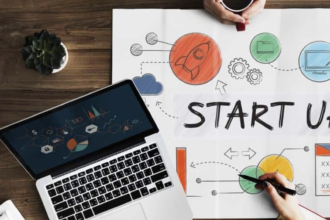



The startup world is often presented through its biggest moments: a new funding round, a rapid valuation increase, a major acquisition, or a founder celebrating a breakthrough.
But those headlines tell only part of the story.
Behind every ambitious startup is a less visible journey filled with difficult decisions, uncertain markets, changing customer expectations, financial pressure, hiring challenges, and moments when the original business idea has to evolve.
These are the startup realities that rarely fit into a headline.
Yet they are often where the most valuable lessons emerge.
Startups are built on potential, but potential alone does not create a sustainable company. Founders have to turn an idea into something customers want, develop a business model that can support growth, build a capable team, and continuously adapt as circumstances change.
That journey creates stories of progress that are rarely linear.
Understanding the Realities Behind Startup Growth
Startup growth is often measured through numbers.
Revenue.
Users.
Funding.
Market share.
Valuation.
Employee count.
These metrics matter, but they do not always reveal the health of a business.
A startup can grow quickly while struggling with high customer acquisition costs. Another company may expand slowly while building a highly loyal customer base and a sustainable business model.
This is why understanding startup realities requires looking beyond headline growth.
Progress can mean many things.
It can mean reaching product-market fit.
It can mean retaining customers.
It can mean becoming profitable.
It can mean reducing operating costs.
It can mean successfully entering a new market.
It can even mean realizing that the original idea was wrong and having the courage to change direction.
For founders, progress is often less about moving in a straight line and more about learning which direction is worth pursuing.
The Idea Is Only the Beginning
Many startups begin with an idea that appears simple.
Perhaps there is an inefficient process that could be improved.
Perhaps customers are underserved.
Perhaps a new technology makes an old business model possible in a different way.
But identifying an opportunity is only the first step.
The real challenge begins when the idea meets the market.
Customers may not behave as expected.
Competitors may respond quickly.
Technology may prove more expensive to develop than anticipated.
Regulatory requirements may change the economics of the business.
A product that founders believe is essential may turn out to be something customers consider optional.
This is one of the most important startup realities: an idea does not become a business simply because it is innovative.
It becomes a business when enough customers see value in it and are willing to support it.
Customer Problems Matter More Than Startup Hype
A startup can have impressive branding, sophisticated technology, and an experienced founding team.
None of those factors can compensate indefinitely for a product that does not solve a meaningful problem.
Successful founders spend considerable time understanding customers.
They ask questions.
They observe behavior.
They test assumptions.
They analyze feedback.
Most importantly, they remain willing to change their product when the evidence suggests they should.
This customer-first approach can prevent one of the most expensive mistakes in entrepreneurship: spending significant time and money building something people do not actually need.
The strongest startups often do not begin with the question:
“What can we build?”
They begin with:
“What problem is worth solving?”
That distinction can shape everything that follows.
Funding Can Accelerate Growth, But It Is Not the Destination
Funding is one of the most visible parts of the startup ecosystem.
A major investment announcement can generate attention from customers, employees, competitors, and potential partners.
Capital can provide startups with the resources to hire talent, develop technology, enter new markets, strengthen operations, and accelerate customer acquisition.
But funding should not be confused with business success.
Investment creates expectations.
Once capital is raised, founders may face pressure to grow faster, reach specific milestones, expand teams, or demonstrate increasing market traction.
That can create a difficult balancing act.
A startup needs enough ambition to take advantage of its opportunity without allowing growth targets to overwhelm the fundamentals of the business.
Capital is a tool.
The quality of the business ultimately determines what that capital can accomplish.
The Reality of Building a Startup Team
Founders frequently discover that building a company is also an exercise in building people and culture.
In the earliest stages, a small team may handle everything.
One person might be responsible for product decisions in the morning, customer conversations in the afternoon, and financial planning at night.
As the company grows, responsibilities become more specialized.
That transition can be difficult.
The skills required to operate a five-person startup are not necessarily the same skills required to lead a 50-person organization.
Founders must learn to delegate.
They need to hire people who can operate independently.
They must establish processes without creating unnecessary bureaucracy.
And they need to communicate a clear direction while allowing employees enough autonomy to contribute.
The people inside a startup can become one of its greatest competitive advantages.
They can also become one of its greatest challenges.
Startup Realities Include Failure and Reinvention
Failure is often treated as the opposite of progress.
In entrepreneurship, that is not always true.
A failed experiment can provide information.
A rejected product can reveal a customer need that was misunderstood.
A marketing campaign that performs poorly can expose an ineffective acquisition strategy.
A hiring mistake can teach a founder what the organization actually needs.
The important distinction is between failure that produces learning and failure that is simply repeated.
Strong founders create systems that allow them to test ideas without putting the entire company at unnecessary risk.
They experiment.
They measure.
They learn.
Then they make another decision.
This creates a culture where changing direction is not necessarily viewed as weakness.
Sometimes, it is evidence of better judgment.
Technology Is Creating New Startup Possibilities
Technology continues to reshape what startups can build and how quickly they can build it.
Artificial intelligence, cloud infrastructure, automation, digital payments, advanced analytics, robotics, and other technologies are lowering barriers that once required significant capital and specialized infrastructure.
A small team can now access tools and capabilities that were previously available primarily to large organizations.
That creates enormous potential.
But it also creates greater competition.
When technology becomes easier to access, simply having access to the technology is no longer a sufficient advantage.
The competitive question becomes:
What can this startup do with it that others cannot easily replicate?
The answer may involve proprietary data, distribution, customer relationships, specialized expertise, operational execution, intellectual property, or a deep understanding of a specific market.
Technology can create the opportunity.
Execution determines what happens next.
Market Timing Can Change Everything
A strong idea introduced at the wrong time can struggle.
A market may not yet be ready.
Customers may not understand the product.
The supporting infrastructure may not exist.
Costs may be too high.
Regulations may limit adoption.
Then market conditions change.
Suddenly, the same idea can become far more relevant.
This is why timing remains an important element of startup success.
Founders need to understand not only what customers need but also why they need it now.
The best opportunity is often found where several trends intersect.
Technology may become cheaper.
Consumer behavior may shift.
An industry may face disruption.
A regulatory change may open a new market.
Together, these developments can create an environment where a previously difficult business becomes commercially viable.
The Importance of Sustainable Growth
One of the most important lessons emerging from modern entrepreneurship is that growth needs a foundation.
Rapid expansion can be exciting, but uncontrolled growth can create operational problems.
A company may acquire customers faster than it can support them.
It may hire faster than it can build an effective organizational structure.
It may enter new markets before understanding local customer behavior.
It may spend aggressively before establishing a reliable path toward sustainable economics.
Sustainable growth does not mean avoiding ambition.
It means making sure that ambition is supported by strong fundamentals.
Those fundamentals can include:
- Healthy unit economics
- Strong customer retention
- Disciplined spending
- Reliable operations
- Effective leadership
- Clear product-market fit
- Strong internal culture
- Repeatable customer acquisition
A startup that grows responsibly may be better positioned to withstand market volatility than one that depends entirely on continuous expansion.
Investors Are Looking Beyond the Pitch
Investors naturally want to understand a startup’s growth potential.
But sophisticated investment decisions involve more than listening to a compelling pitch.
Investors may examine the size of the addressable market, customer acquisition economics, retention, competitive advantages, revenue quality, margins, leadership capability, technology, and the path toward future growth.
The startup story matters.
So does the evidence behind it.
A compelling founder can attract attention, but measurable progress can sustain it.
This is why founders need to understand their business at a deeper level than the numbers presented in a pitch deck.
They should know what drives revenue.
They should understand why customers stay.
They should know which costs scale and which do not.
They should understand where the next major risks could emerge.
That level of clarity can become increasingly important as a startup moves from early experimentation toward larger-scale operations.
The Role of Resilience in Entrepreneurship
Entrepreneurship demands a particular kind of resilience.
Not the idea that founders should simply work harder regardless of circumstances.
Rather, resilience means being able to absorb setbacks without losing the ability to make rational decisions.
A founder may face a lost customer.
A delayed product launch.
A funding challenge.
A key employee departure.
An unexpected competitor.
A change in market conditions.
Each event can create pressure.
The ability to respond calmly can be more valuable than the ability to predict every possible problem.
Resilient founders understand that uncertainty is part of the process.
They prepare for it.
They maintain financial discipline.
They communicate with their teams.
They revisit assumptions.
And they keep moving while remaining willing to change course.
What Startup Stories Can Teach Established Businesses
The lessons from startups are not limited to entrepreneurs.
Established businesses can also learn from the startup mindset.
Startups often have fewer resources, which forces them to prioritize.
They cannot afford to pursue every opportunity.
They have to determine what matters most.
Large organizations can sometimes lose that discipline because they have more resources and more layers of decision-making.
The startup approach can encourage established businesses to experiment faster, listen more closely to customers, reduce unnecessary complexity, and focus resources on the opportunities with the strongest potential.
At the same time, startups can learn something from established businesses: systems matter.
Growth eventually requires structure.
Financial controls, compliance, governance, risk management, operational processes, and leadership development become increasingly important as organizations scale.
The strongest companies often combine startup agility with mature business discipline.
The Future of Startup Potential
The future startup landscape is likely to be shaped by several forces working simultaneously.
Artificial intelligence is changing how products are built and how businesses operate.
Digital infrastructure is making global markets more accessible.
Climate and sustainability challenges are creating demand for new solutions.
Healthcare and longevity are generating opportunities across technology and services.
Financial technology continues to reshape how people and businesses access financial products.
Meanwhile, demographic and behavioral changes are creating new customer needs.
These trends do not guarantee startup success.
They create possibilities.
The entrepreneurs who benefit most will likely be those who can identify meaningful problems within these emerging markets and build solutions that are commercially viable.
The opportunity is significant.
So is the competition.
Stories of Progress Are Rarely Straight Lines
Every successful startup eventually develops a story.
But the final version often looks very different from the reality of building the company.
The public may see the funding announcement.
The founder remembers the months of uncertainty before it.
The public may see the product launch.
The team remembers the failed prototypes.
The public may see the expansion.
The founders remember the difficult decisions about where to spend limited resources.
That difference matters.
Because startup success is rarely one defining moment.
It is usually the result of hundreds of smaller decisions made under uncertainty.
Some work.
Some do not.
The ability to learn from each one creates momentum.
The Bigger Picture
The most valuable startup stories are not necessarily the ones with the largest valuations or the fastest growth.
They are the stories that reveal how businesses are actually built.
They show the importance of customer understanding, disciplined execution, adaptable leadership, financial awareness, technology, timing, and resilience.
The real startup realities are both challenging and full of potential.
There will always be uncertainty.
Markets will change.
Technology will evolve.
Competitors will emerge.
Customer expectations will shift.
But those same changes create opportunities for entrepreneurs willing to look closely, question assumptions, and build solutions that genuinely matter.
The startup journey is therefore not simply a race toward growth.
It is a continuous process of discovering what works, understanding what does not, and turning uncertainty into informed action.
That is where progress becomes meaningful.
And that is where startup potential becomes a real business.
Stay connected with Business Herald for the latest business news, insights, and updates.
Follow us on Facebook, Instagram, LinkedIn, and YouTube.
Join our growing community on WhatsApp and Telegram for real-time updates delivered directly to you.