

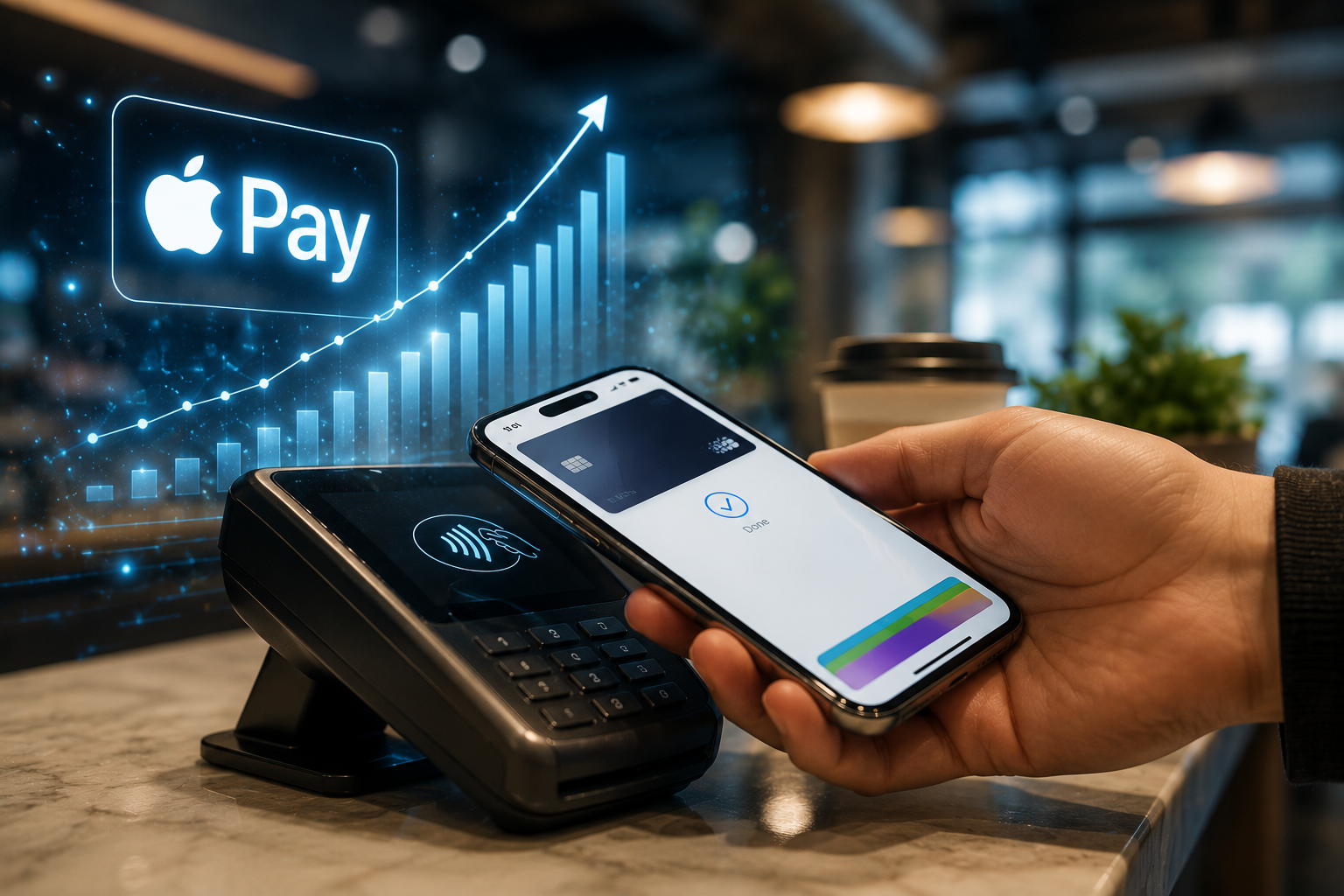

Apple Pay has quietly become one of the most widely used digital payment tools in the world, and its growth over the past decade tells a compelling story. This Apple Pay transaction milestone reflects more than just a large number. It signals a broader shift in how people across the globe choose to pay, both in stores and online.
In this article, we’ll look at how Apple Pay reached this scale, what the numbers actually reveal, and why this milestone matters for consumers, retailers, and the future of digital payments.
How Apple Pay Reached This Transaction Milestone
Apple first introduced Apple Pay in 2014 as a faster, more secure alternative to swiping a physical card. Adoption was gradual at first, limited by which banks and retailers supported the service. Within a few years, however, growth accelerated sharply.
Apple publicly confirmed 10 billion Apple Pay transactions in 2019, a figure Tim Cook highlighted as proof that mobile payments had moved from a novelty to a mainstream habit. That Apple Pay transaction milestone marked a turning point, showing that consumers were not just downloading the feature but actively using it in daily life.
Since then, Apple has not published a single updated total transaction count on a regular basis. Instead, the company and independent researchers now track Apple Pay’s scale through other metrics, including annual spending volume, user counts, and market share.
What the Numbers Look Like Today
While Apple doesn’t release a running transaction counter, more recent data paints a clear picture of continued growth well beyond that original Apple Pay transaction milestone:
- Apple has reported eliminating well over $1 billion in fraud globally through Apple Pay’s security features.
- Independent industry research estimates Apple Pay processed roughly $450 billion in annual in-store sales volume around its 11th anniversary.
- Apple Pay is now available in dozens of countries and supported by more than 11,000 banks and card networks worldwide.
- User estimates from third-party analysts place Apple Pay’s global user base at several hundred million people, with growth continuing each year.
These figures suggest that even without a new official transaction count, Apple Pay’s actual usage volume today likely dwarfs the 10 billion figure from 2019 many times over.
Why This Transaction Milestone Matters
An Apple Pay transaction milestone like this isn’t just a marketing talking point. It reflects a genuine shift in consumer behavior around how people choose to pay.
For Consumers
- Faster checkout experiences reduce friction at point-of-sale terminals.
- Enhanced security through device-based authentication reduces fraud exposure.
- Broader merchant acceptance means fewer situations where a physical card is still required.
For Retailers
- Lower fraud rates translate into fewer costly chargebacks.
- Faster transactions can reduce checkout lines and improve customer experience.
- Growing consumer preference for contactless payment makes acceptance increasingly essential, not optional.
For the Payments Industry
- Apple Pay’s continued growth pressures competitors to improve their own digital wallet offerings.
- Milestones like this accelerate the broader shift away from cash and physical cards.
- Data around fraud reduction strengthens the case for tokenized, device-based payment security across the industry.
The Road Beyond This Milestone
Apple Pay’s expansion hasn’t stopped at payments. The platform now supports digital identification in select U.S. states, transit access in hundreds of regions worldwide, and integration with services beyond simple point-of-sale transactions. This broader push suggests Apple views Wallet not just as a payment tool, but as a foundational layer for how people manage everyday transactions and identity on their devices.
Reaching this Apple Pay transaction milestone also raises an important question for the years ahead: how much further can adoption grow before it becomes the default way most people pay? With usage still representing only a fraction of eligible in-store transactions in markets like the United States, there appears to be significant room left for growth.
Stay connected with Business Herald for the latest business news, insights, and updates.
Follow us on Facebook, Instagram, LinkedIn, and YouTube.
Join our growing community on WhatsApp and Telegram for real-time updates delivered directly to you.