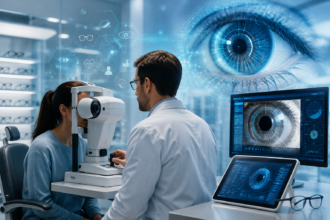



Technology no longer evolves in isolated bursts of innovation. It moves as a continuous, interconnected current. Understanding the current state of technological evolution means looking beyond individual gadgets or apps and recognizing the broader patterns shaping how humans live, work, and connect with one another.
This article offers a comprehensive look at the current state of technological evolution, examining the forces driving it, the industries being reshaped, and what these shifts suggest about where we’re headed next.
Understanding the Current State of Technological Evolution
Unlike previous eras of innovation, today’s technological progress is defined by convergence. Artificial intelligence, connectivity, automation, and data science are no longer developing separately; they are feeding into one another, accelerating the pace of change across nearly every industry.
The current state of technological evolution can be understood through a few defining characteristics:
- Speed: Innovations reach mainstream adoption faster than ever before.
- Interdependence: Breakthroughs in one field often unlock progress in another.
- Accessibility: Advanced tools are increasingly available to individuals and small businesses, not just large corporations.
- Global reach: Technological shifts now spread across borders almost instantly.
Artificial Intelligence as a Central Force
No discussion of the current state of technological evolution is complete without artificial intelligence. AI has moved from a specialized research field into a practical tool embedded across industries. Healthcare, finance, education, manufacturing, and creative work all now rely on AI in some form.
Generative AI tools assist with writing, design, and coding. Predictive models help businesses forecast demand and detect fraud. Machine learning continues to improve the accuracy of everything from medical diagnostics to language translation.
Why AI Is Different This Time
Earlier waves of automation replaced repetitive physical tasks. Today’s AI increasingly handles cognitive and creative tasks as well, which is why its impact feels more disruptive and more transformative than previous technological shifts.
Connectivity and the Expanding Digital Infrastructure
Behind every major innovation sits an invisible layer of infrastructure: networks, cloud computing, and data centers. The current state of technological evolution depends heavily on faster, more reliable connectivity, particularly through 5G networks and expanding cloud capabilities.
This infrastructure enables real-time data processing at massive scale, which is essential for technologies like autonomous vehicles, remote healthcare, and smart city systems. Without this connective backbone, many of today’s most talked-about innovations simply couldn’t function.
Automation Across Industries
Automation has expanded well beyond factory floors. Today, it touches logistics, customer service, agriculture, and even legal and financial services. This shift reflects a key theme within the current state of technological evolution: efficiency gains are no longer limited to physical production, but extend into knowledge-based and service industries as well.
Examples of Automation in Action
- Logistics: Automated warehouses and delivery routing reduce shipping times.
- Agriculture: Sensor-driven systems optimize water and fertilizer use.
- Customer service: AI chatbots handle routine queries around the clock.
- Finance: Automated systems flag irregular transactions instantly.
Sustainability as a Driving Priority
A notable feature of the current state of technological evolution is the growing emphasis on sustainability. Innovation is no longer judged purely on performance or convenience; environmental impact has become a core consideration in technology design.
Renewable energy storage, energy-efficient computing, and circular manufacturing practices are increasingly shaping how new technologies are built and scaled. This shift reflects broader public and regulatory pressure for growth that doesn’t come at the planet’s expense.
Data Privacy and Ethical Technology
As technology becomes more embedded in daily life, questions around data privacy and ethical use have moved to the forefront. The current state of technological evolution includes a growing push for transparency in how personal data is collected, stored, and used.
Regulatory frameworks are tightening worldwide, and companies are increasingly expected to build privacy and ethical safeguards into their products from the outset, rather than treating them as an afterthought.
Challenges Shaping the Path Forward
Despite rapid progress, several challenges continue to shape the current state of technological evolution:
- Digital inequality: access to advanced technology remains uneven across regions and income levels.
- Workforce disruption: automation and AI are reshaping job markets faster than training systems can adapt.
- Cybersecurity risks: greater connectivity creates more potential points of vulnerability.
- Regulatory uncertainty: laws often struggle to keep pace with the speed of innovation.
Addressing these challenges will likely determine how equitably the benefits of technological progress are distributed.
What This Means for Individuals and Businesses
Understanding the current state of technological evolution isn’t just an academic exercise. It has practical implications:
- Individuals benefit from staying digitally literate and adaptable as new tools emerge.
- Businesses that integrate AI and automation thoughtfully often gain a meaningful competitive edge.
- Policymakers play a critical role in ensuring technological progress remains inclusive and secure.
Final Thoughts
The current state of technological evolution reflects a world where innovation is faster, more interconnected, and more consequential than at any previous point in history. Artificial intelligence, expanding connectivity, automation, and a growing focus on sustainability and ethics are all converging to reshape how societies function.
Rather than a distant future to prepare for, this evolution is already well underway, and how individuals, businesses, and institutions respond today will shape the next chapter of technological progress.
Stay connected with Business Herald for the latest business news, insights, and updates.
Follow us on Facebook, Instagram, LinkedIn, and YouTube.
Join our growing community on WhatsApp and Telegram for real-time updates delivered directly to you.