

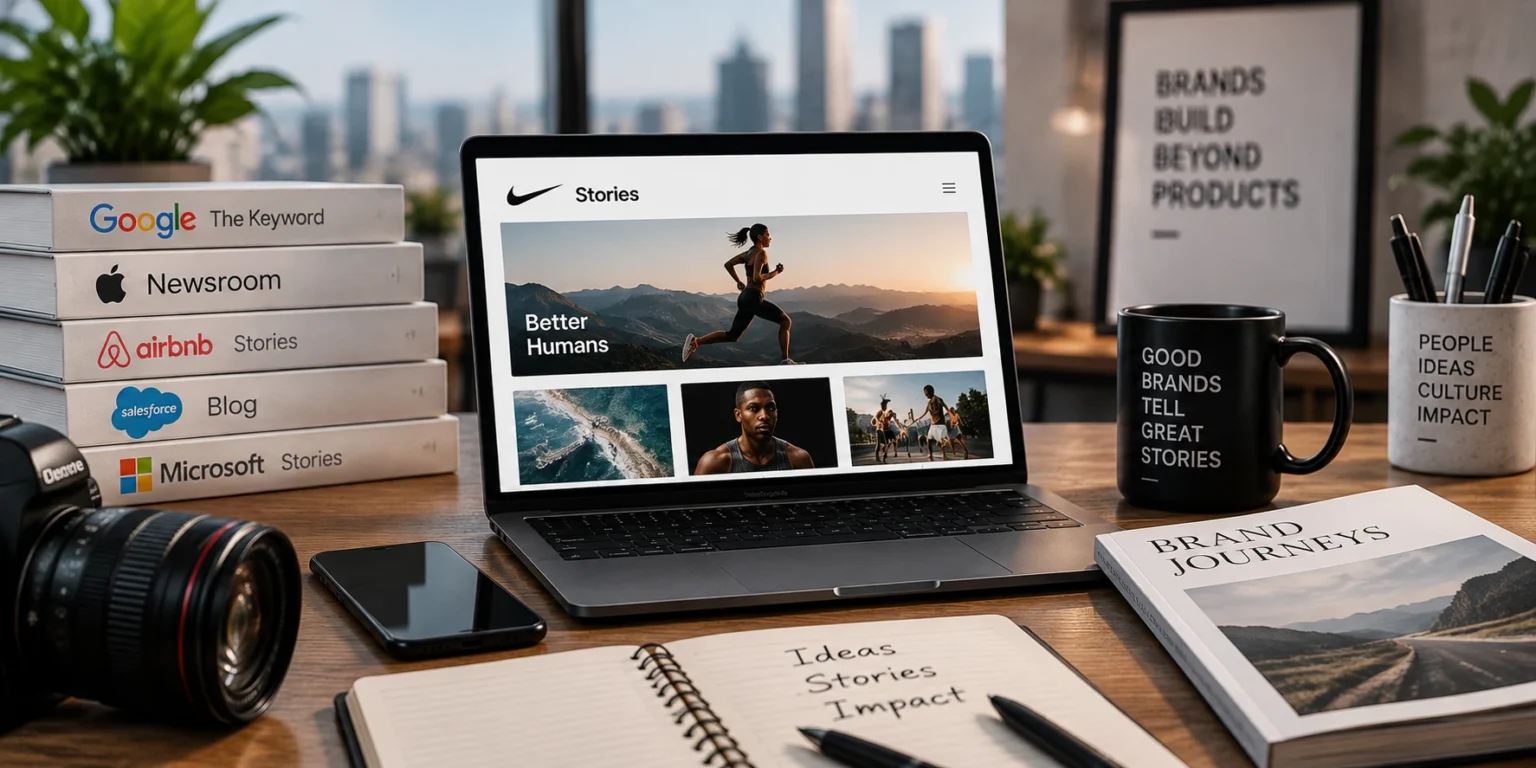

For much of the past two decades, corporate content occupied a modest corner of the marketing department. A podcast might accompany a product launch, a newsletter would collect company updates, and a documentary would mark an anniversary or social initiative. That arrangement is changing as more companies begin building media businesses with dedicated editorial teams, regular publishing schedules, and clearly defined commercial objectives. The purpose is no longer simply to attract attention for a campaign. It is to create an audience that the company can reach repeatedly, learn from, and eventually convert into customers.
Advertising still works, but its economics have weakened
Digital advertising remains one of the fastest ways to reach a large and specific audience. Few companies can rely entirely on organic distribution, particularly when entering a new market or launching an unfamiliar product. The difficulty is that advertising produces temporary access rather than a durable relationship. When spending stops, much of the visibility disappears with it.
The economics have also become less predictable. Advertisers compete in auctions controlled by large technology platforms, while changing privacy rules have restricted some of the tracking methods that once made digital campaigns unusually measurable.
Apple’s App Tracking Transparency framework, for example, requires applications to obtain permission before tracking users across other companies’ apps and websites. Similar pressures from regulators, browsers and consumers have made it harder to follow people across the internet and attribute every sale to a particular advertisement.
These changes have not made paid advertising obsolete, but they have reduced the comfort of depending on it. A company that acquires nearly every customer through paid channels remains exposed to higher auction prices, platform policy changes, and competitors willing to spend more.
An owned media strategy provides a partial hedge. A useful podcast, newsletter or video series can continue bringing people into the business long after the original production cost has been absorbed.
Companies building media businesses are changing acquisition
The phrase “media business” can be misleading because most corporate media operations do not sell subscriptions or advertising. Their economic value often appears elsewhere, through lower customer-acquisition costs, stronger retention, better-informed prospects, and greater brand recognition. The content may be free, but the audience it attracts can influence revenue over a much longer period.
HubSpot’s acquisition of The Hustle in 2021 offered a clear illustration of this logic. The software company did not merely purchase articles. It acquired a business newsletter, podcast, and research operation with an established relationship among entrepreneurs and professionals, many of whom resembled HubSpot’s existing and prospective customers.
HubSpot described the acquisition as a way to meet the content needs of scaling companies across the formats they already used, and subsequently developed a broader podcast network around business and entrepreneurship. HubSpot’s acquisition announcement presented media as part of the company’s customer relationship strategy, rather than a collection of promotional assets.
The commercial mechanism is indirect but rational. A conventional advertisement asks for action immediately. Strong editorial content can earn attention before a buyer has selected a product, prepared a budget, or even defined the problem that needs solving. When the purchase process eventually begins, the company is already familiar and may have helped shape the customer’s understanding of the market.
Podcasts create familiarity before the sales conversation
Branded podcasts are particularly suited to products that require explanation. Software, financial services, professional education and business-to-business products often have long buying cycles in which customers need more than a slogan. A well-produced interview or discussion allows a company to demonstrate knowledge without forcing every episode into a sales pitch.
Shopify Masters, introduced as an e-commerce podcast for entrepreneurs, follows this model. Its interviews focus on the operating experiences of merchants and founders rather than functioning as repeated advertisements for Shopify. The company’s podcast archive has become a continuing source of practical business material for the same entrepreneurial audience that Shopify serves commercially.
Podcasting also builds familiarity through voice. Listeners may spend 30 minutes or more with a host, a level of attention that is difficult to purchase through display advertising or short-form video. Repeated listening can make a company feel less remote, although the effect depends on editorial quality.
A podcast that avoids difficult subjects, overuses product references or presents every guest as a success story soon becomes recognisable as an advertisement in a longer format.
Newsletters turn attention into a continuing relationship
Social platforms are efficient distribution systems, but companies do not control their algorithms, interfaces or audience access. A newsletter gives a business a more direct line to readers who have chosen to receive it. That permission is commercially valuable because it can support repeated communication without requiring the company to buy the same audience again for every campaign.
This does not mean an email audience is fully “owned.” Delivery still depends on email providers, privacy rules, and the continuing consent of subscribers. Readers can leave with one click, and an address without genuine engagement has little economic value. The advantage lies in continuity rather than ownership in the literal sense.
Successful company newsletters therefore behave more like publications than mailshots. They establish a clear subject, a recognisable voice and a dependable reason to open the next edition. Product announcements may appear, but they cannot be the only material offered. The newsletter earns its place in the inbox by helping readers interpret an industry, perform a task or make a better decision.
India’s Zerodha provides a related example through Varsity, its extensive educational platform covering markets, investment analysis, derivatives and personal finance. The company describes Zerodha Varsity as a repository of high-quality market education. Although it is broader than a newsletter, its business logic is similar: educate a relevant audience, reduce the knowledge barrier surrounding a complex service, and remain useful before a transaction takes place.
Documentaries build meaning that campaigns struggle to retain
Documentary and long-form video occupy a different part of the customer journey. They are expensive to produce and rarely deliver the immediate conversion data expected from performance advertising. Their value lies in explaining what a company stands for through people, places and consequences rather than polished corporate claims.
Patagonia has developed one of the clearest versions of this approach. Patagonia Films publishes short and feature-length work about outdoor culture, environmental campaigns and communities connected to the natural world. The films are not conventional demonstrations of jackets or climbing equipment. They reinforce the company’s identity by repeatedly examining subjects that its customers already associate with the brand.
Marriott took another route when its content studio produced the short film Two Bellmen, placing hotel properties inside an entertainment format rather than a standard travel advertisement. Salesforce later extended the idea into a corporate streaming platform. Launched in 2021, Salesforce+ combined live events with original and on-demand programming intended for customers and professionals across different industries.
These examples show why companies are interested in formats once considered too elaborate for corporate marketing. A campaign has a buying window and an expiry date. A documentary, interview archive or educational series can become part of the company’s cultural record, providing material for customers, employees, recruits, partners and journalists over many years.
Executive-led content adds a human voice, with conditions
Executives have also become distribution channels in their own right. A founder writing about a difficult product decision or a chief executive explaining an industry change can often command more attention than a statement published through an anonymous corporate account. Audiences can evaluate a person’s reasoning, temperament, and willingness to engage with criticism.
There is evidence that substantive executive content can influence commercial judgment. The 2024 Edelman and LinkedIn study of almost 3,500 management-level professionals across seven countries found that 73% of decision-makers considered an organisation’s thought leadership a more trustworthy basis for assessing its capabilities than conventional marketing material or product sheets. The research findings published by LinkedIn also showed that strong thought leadership could prompt buyers to investigate suppliers they had not previously considered.
Yet executive visibility does not automatically create trust. Generic advice, ghostwritten optimism and constant self-congratulation can weaken credibility. The strongest executive-led content contains a real argument, acknowledges uncertainty and reflects experience that could not easily have come from anyone else.
It also exposes the company to reputational risk when the executive speaks carelessly or becomes too closely identified with the entire brand.
Media requires editorial discipline, not simply production volume
The temptation for companies is to measure their new media operations using the same dashboards applied to advertising. That can lead to misleading conclusions. A podcast listener may become a customer months later, while an article might influence a buyer who never clicks a trackable link. Conventional last-click attribution frequently understates these effects because it credits the final interaction rather than the source that first created understanding or preference.
Companies need a wider set of indicators. These can include returning readers, direct traffic, newsletter engagement, branded searches, subscriber growth, sales conversations influenced by content, and retention among audience members who later become customers. None should be treated as proof in isolation, but together they reveal whether the publication is creating a commercially relevant relationship.
Editorial independence is equally important. Corporate media cannot be fully independent because the company funds it and expects a business return. It can, however, be intellectually useful and honest about its interests. The media operation becomes valuable when audiences believe it would still deserve attention even if the product links were removed.
The next competitive asset may be an audience
More companies building media businesses will discover that publishing consistently is harder than approving a marketing campaign. Media requires patience, editorial judgment, and a willingness to serve an audience before asking it to buy. Many corporate podcasts and newsletters will disappear because their creators underestimate this obligation.
The operations that endure will become more closely connected to product development, sales and corporate strategy. Audience questions can reveal unmet needs, editorial engagement can identify emerging markets, and trusted hosts or executives can introduce unfamiliar products with context that advertising cannot provide. Some companies may eventually sell subscriptions, sponsorships or events, but direct media revenue will remain secondary for most.
The larger prize is strategic resilience. A company with a respected publication, recognisable voices and a voluntary audience possesses a form of distribution that competitors cannot quickly reproduce. Advertising can rent attention for the duration of a budget. A serious media operation can accumulate attention, knowledge and trust across several business cycles.
Stay connected with Business Herald for the latest business news, insights, and updates.
Follow us on Facebook, Instagram, LinkedIn, and YouTube.
Join our growing community on WhatsApp and Telegram for real-time updates delivered directly to you.