

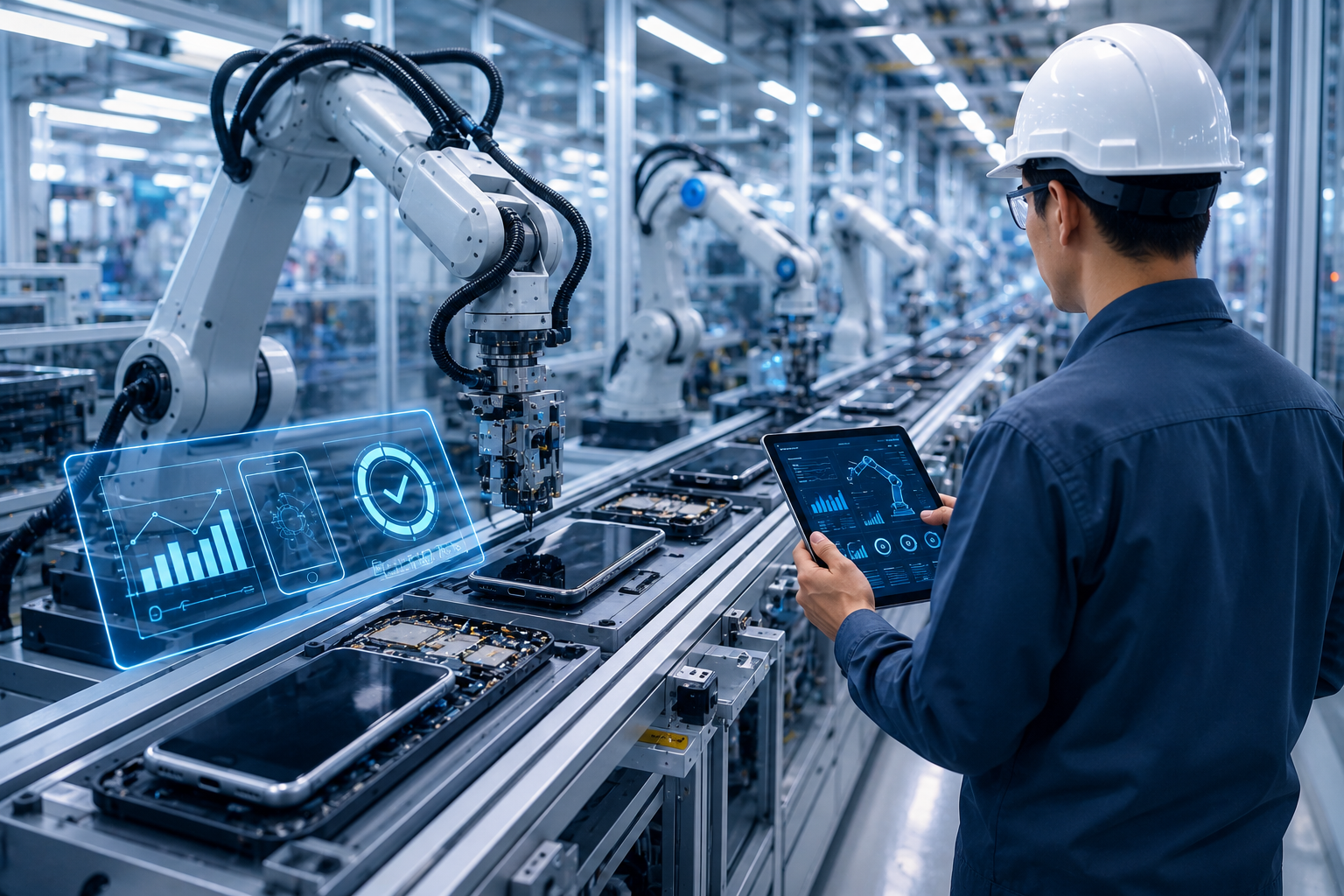

Mobile production, from device assembly to on-the-go manufacturing units, is under constant pressure to move faster without sacrificing quality. Rising costs, tighter timelines, and increasingly complex supply chains mean that old production methods simply can’t keep up anymore.
This is where smart solutions in mobile production come in. Rather than relying on manual oversight and disconnected processes, forward-thinking teams are adopting advanced strategies that combine automation, real-time data, and flexible workflows to unlock real efficiency gains.
This blog breaks down what those strategies actually look like, why they matter, and how production teams can start applying them today.
What Are Smart Solutions in Mobile Production?
Smart solutions in mobile production refer to technology-driven approaches that improve how mobile manufacturing and assembly processes are planned, monitored, and executed. This includes:
- IoT-enabled equipment that tracks performance and flags issues in real time
- Automated scheduling systems that adjust production plans based on live demand
- Predictive maintenance tools that reduce unplanned downtime
- Mobile-first dashboards that let managers monitor production from anywhere
Unlike traditional fixed-line manufacturing, mobile production often needs to adapt to changing locations, shifting demand, and variable resource availability. Smart solutions make that flexibility possible without losing control over quality or cost.
Why Efficiency Matters More Than Ever in Mobile Production
Mobile production environments face unique pressures that make efficiency non-negotiable:
- Variable conditions: Equipment, staffing, and resources can shift from one production run to the next.
- Tighter margins: Rising material and logistics costs leave less room for waste.
- Faster demand cycles: Products need to move from production to market more quickly than ever.
- Distributed teams: Coordinating across multiple sites or mobile units adds complexity that manual processes struggle to manage.
Without smart solutions in place, these pressures often lead to bottlenecks, inconsistent output, and reactive firefighting instead of proactive planning.
Advanced Strategy 1: Real-Time Monitoring Across the Production Line
One of the biggest shifts in mobile production is the move from periodic checks to continuous, real-time monitoring. Sensors and connected devices track everything from equipment temperature to output speed, feeding that data into a central dashboard.
This matters because problems can be caught and corrected within minutes, not discovered hours or days later during a scheduled inspection. Teams gain the ability to respond to issues as they happen, rather than absorbing the cost of delayed detection.
Advanced Strategy 2: Predictive Maintenance Instead of Reactive Repairs
Unplanned equipment failure is one of the most costly disruptions in mobile production. Predictive maintenance uses data from connected machinery to identify wear patterns and flag potential failures before they happen.
Instead of waiting for a breakdown or following a fixed maintenance schedule regardless of actual equipment condition, teams can service machinery exactly when it’s needed. This reduces downtime, extends equipment lifespan, and keeps production schedules on track.
Advanced Strategy 3: Dynamic Scheduling Based on Live Demand
Static production schedules struggle to keep up with mobile production’s shifting demands. Smart scheduling systems pull in live data, such as order volume, resource availability, and staffing levels, to adjust plans automatically.
This means production capacity is allocated where it’s actually needed, rather than following a rigid plan that may no longer reflect current conditions. The result is less idle time, fewer resource conflicts, and output that better matches real demand.
Advanced Strategy 4: Mobile-First Oversight for Distributed Teams
Because mobile production often spans multiple locations or moving units, oversight tools need to work just as well from a phone or tablet as they do from a central control room. Mobile-first dashboards give managers visibility into performance, quality metrics, and potential issues no matter where they are.
This kind of accessibility matters most during high-pressure periods, when quick decisions from off-site managers can prevent small issues from becoming major delays.
Advanced Strategy 5: Connected Supply Chain Integration
Efficiency in mobile production doesn’t stop at the production line. Smart solutions increasingly connect production data directly with supply chain and inventory systems, so material shortages or delivery delays are flagged before they cause a production stoppage.
This integration allows teams to plan around potential disruptions instead of reacting to them after the fact, which is especially valuable in mobile production settings where sourcing conditions can change quickly from one site to another.
How to Start Implementing Smart Solutions in Mobile Production
For teams looking to adopt these strategies, a phased approach tends to work best:
- Start with visibility. Introduce real-time monitoring before adding more complex automation, so you understand your baseline performance first.
- Identify your biggest bottleneck. Focus initial investment on the strategy that addresses your most costly or frequent disruption.
- Choose connected, not isolated, tools. Prioritize systems that can share data with existing production and supply chain platforms.
- Train teams alongside the technology. Smart solutions only improve efficiency when the people using them understand how to act on the insights provided.
- Review and adjust regularly. Treat implementation as an ongoing process, not a one-time rollout.
Measuring the Impact of Smart Solutions
Adopting new tools and strategies is only half the equation. Production teams also need a clear way to measure whether these changes are actually delivering results. A few metrics tend to matter most:
- Downtime reduction: Track how much unplanned downtime decreases after predictive maintenance is introduced.
- Cycle time: Measure how long it takes to move from raw materials to finished product, and watch for improvement as scheduling becomes more dynamic.
- First-pass yield: Monitor how often products meet quality standards without requiring rework, since better real-time monitoring often improves this figure directly.
- Cost per unit: Compare production costs before and after implementation to confirm that efficiency gains are translating into real savings.
Without tracking these numbers, it’s easy to assume a new system is working simply because it looks more advanced. Consistent measurement turns smart solutions from a technology investment into a strategic advantage with a clear, provable return.
Efficiency Is Now a Strategic Advantage
Smart solutions in mobile production are no longer optional extras. They are becoming the standard for teams that want to stay competitive in an environment defined by shifting demand, tighter margins, and rising complexity.
By combining real-time monitoring, predictive maintenance, dynamic scheduling, mobile-first oversight, and connected supply chains, production teams can move from reactive problem-solving to proactive, efficient operations. The businesses that adopt these advanced strategies now will be better positioned to handle whatever comes next.
Stay connected with Business Herald for the latest business news, insights, and updates.
Follow us on Facebook, Instagram, LinkedIn, and YouTube.
Join our growing community on WhatsApp and Telegram for real-time updates delivered directly to you.