
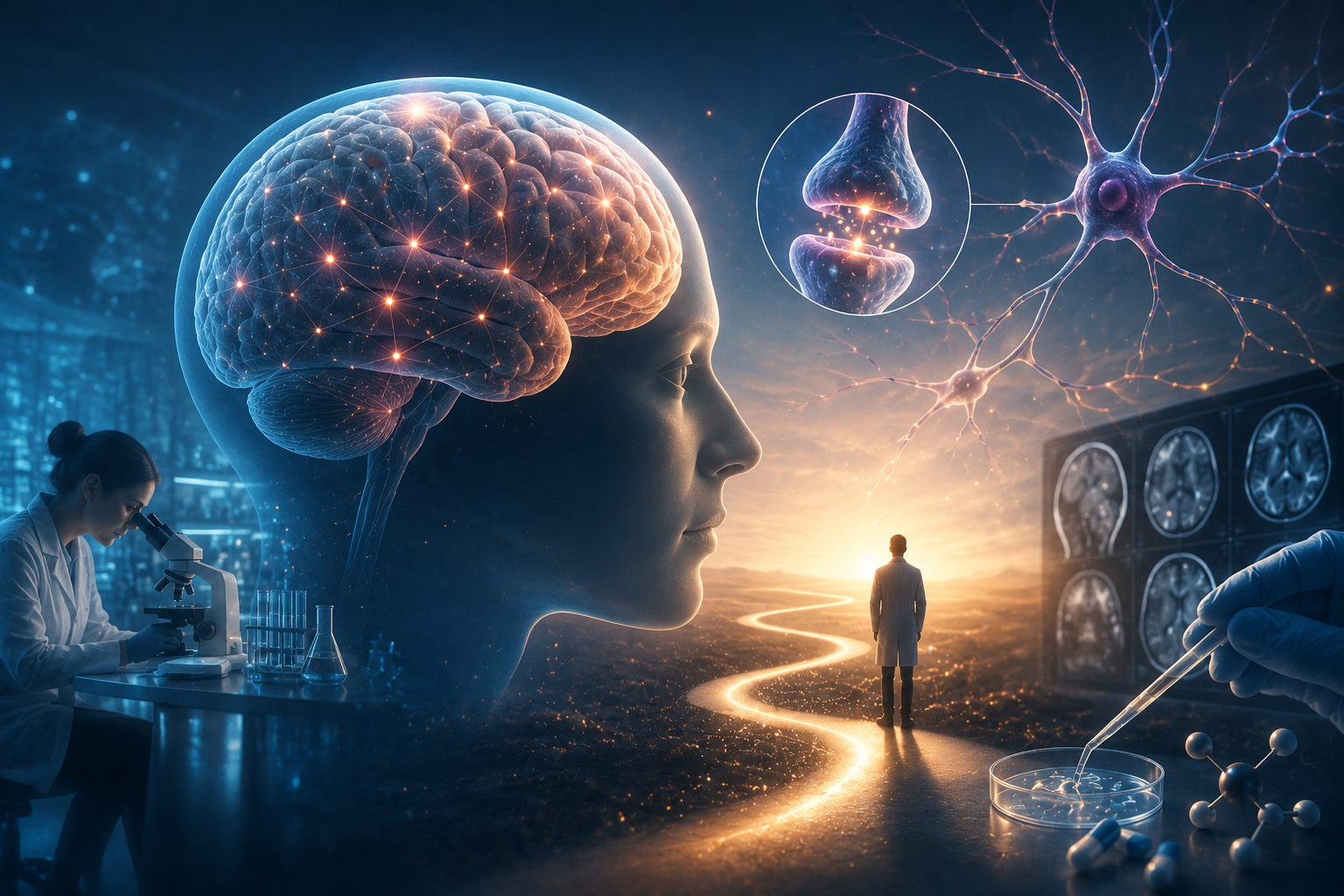

The human brain controls movement, memory, language, emotion, perception and many of the automatic processes that sustain life. When its networks are damaged or disrupted, the effects can alter almost every aspect of a person’s independence and identity.
This complexity makes treating brain disorders one of medicine’s most demanding challenges.
Neurological conditions include stroke, epilepsy, migraine, dementia, Parkinson’s disease, multiple sclerosis, traumatic brain injury, brain tumours and disorders affecting the spinal cord or peripheral nerves. Neuroscience also increasingly overlaps with psychiatry as researchers investigate the circuits involved in depression, obsessive-compulsive disorder and other neuropsychiatric conditions.
The scale of the challenge is substantial. The World Health Organization’s 2025 global neurology report found that neurological conditions affect more than 40% of the global population and are associated with more than 11 million deaths annually. Fewer than one-third of countries had a national policy addressing the growing burden.
Despite that burden, neuroscience is entering a period of rapid change.
Researchers can now map individual brain-cell types, detect disease-related proteins in blood, record neural signals with implanted devices and target abnormal circuits with electrical or acoustic energy. New medicines are beginning to affect the biological processes behind certain diseases rather than only managing their symptoms.
These advances do not mean that most brain disorders can be cured. Many technologies remain experimental, benefits may be modest, and serious safety, affordability and access questions remain.
However, the direction of travel is clear: neurology is moving towards earlier diagnosis, more precise intervention and treatments adapted to the biology of individual patients.
Table of Contents
- Why Brain Disorders Are So Difficult to Treat
- Mapping the Brain at Cellular and Circuit Levels
- Detecting Disease Before Severe Symptoms Appear
- Disease-Modifying Treatments for Alzheimer’s Disease
- Precision Gene Delivery and Molecular Therapies
- Deep Brain Stimulation and Adaptive Neurotechnology
- Focused Ultrasound and Non-Invasive Neuromodulation
- Brain-Computer Interfaces and Restoring Communication
- Rehabilitation and the Brain’s Capacity to Adapt
- Artificial Intelligence in Neuroscience
- Ethical Challenges and Patient Protection
- The Global Neurology Access Gap
- The Business and Investment Opportunity
- Frequently Asked Questions
Why Treating Brain Disorders Is So Difficult
The brain is not a single uniform organ. It contains many specialised cell types organised into interconnected circuits that operate across multiple levels.
A treatment that benefits one network may interfere with another. The same clinical symptom may also arise from different underlying biological mechanisms.
Memory loss, for example, may result from Alzheimer’s disease, vascular damage, medication effects, infection, depression or another neurological process. Tremor can occur in Parkinson’s disease, essential tremor or several other conditions.
This biological diversity makes accurate diagnosis essential.
The blood-brain barrier creates another obstacle. It protects neural tissue by restricting the movement of substances from the bloodstream into the brain. That defence is vital, but it can also prevent potentially useful medicines from reaching their intended targets.
Timing presents a further challenge. Neurodegenerative diseases may develop for years before symptoms become obvious. By the time substantial memory, movement or language problems emerge, significant cellular damage may already have occurred.
Scientists must therefore solve several problems simultaneously:
- identify the correct biological mechanism;
- detect it early enough to intervene;
- deliver treatment to the relevant cells or circuits;
- avoid damaging healthy brain functions; and
- demonstrate meaningful improvements in patients’ daily lives.
Mapping the Brain at Cellular and Circuit Levels
One of the most important frontiers in neuroscience is the effort to create increasingly detailed maps of the brain.
Traditional brain maps divided the organ into anatomical regions. Modern research goes further by identifying cell types, molecular characteristics, communication pathways and patterns of electrical activity.
The NIH BRAIN Initiative has prioritised the development of a comprehensive “parts list” of brain cells and the study of how those cells form circuits responsible for sensation, thought, emotion and action. Its long-term objective is to translate improved understanding of brain function into more effective diagnosis, prevention and treatment.
These maps may help researchers understand why certain cells are vulnerable to particular diseases.
Parkinson’s disease disproportionately damages dopamine-producing neurons involved in movement. Alzheimer’s disease affects several interacting systems associated with memory and cognition. Epilepsy can arise when neural circuits become abnormally synchronised.
The future of treating brain disorders may therefore depend on identifying the malfunctioning circuit rather than treating an entire diagnosis as one uniform disease.
This approach is sometimes described as precision neuroscience.
Instead of asking only whether a patient has depression, dementia or epilepsy, clinicians may increasingly ask which biological pathway, network or cell population is producing that individual’s symptoms.
Detecting Brain Disease Earlier
Earlier diagnosis could transform neurological care.
Doctors currently use clinical examinations alongside tools such as magnetic resonance imaging, computed tomography, electroencephalography, nerve-conduction testing, genetic analysis and laboratory tests. The appropriate investigation depends on the condition and symptoms involved.
The emerging frontier is the development of biomarkers: measurable biological signals that indicate whether a disease process is present or progressing.
Blood Tests for Alzheimer’s-Related Pathology
In May 2025, the US Food and Drug Administration cleared the first blood test designed to assist in identifying amyloid pathology associated with Alzheimer’s disease in people showing signs of cognitive decline.
The Lumipulse test measures the ratio of two proteins in plasma. In the supporting study, 91.7% of positive results corresponded with amyloid detected through positron-emission tomography or cerebrospinal-fluid testing, while 97.3% of negative results agreed with negative reference tests. The FDA emphasised that the test is not intended to serve as a stand-alone diagnosis or general population screening tool.
This distinction matters.
A biomarker can strengthen a diagnosis, but it must be interpreted alongside symptoms, medical history and other clinical findings. False-positive and false-negative results can lead to inappropriate treatment, psychological distress or delayed diagnosis.
In February 2026, NIH-supported researchers also reported an experimental blood-based approach that measures structural changes in proteins. The study analysed samples from 520 people and developed a three-protein panel that distinguished Alzheimer’s disease, mild cognitive impairment and healthy controls. The findings require further validation before routine clinical use.
Digital and Physiological Biomarkers
Wearable devices, smartphone assessments and home sensors may eventually help monitor movement, sleep, speech and cognitive performance over time.
These tools could reveal subtle changes that are missed during occasional clinic visits. However, digital biomarkers must be validated across different populations and should not be treated as diagnostic simply because they generate large volumes of data.
Privacy, algorithmic bias and informed consent will become increasingly important as continuous neurological monitoring expands.
Disease-Modifying Treatments for Alzheimer’s Disease
For decades, Alzheimer’s treatment largely focused on reducing symptoms.
A new class of medicines aims to influence the disease process by targeting amyloid beta, a protein that forms plaques in the brain.
The FDA granted traditional approval to lecanemab for patients with mild cognitive impairment or mild dementia-stage Alzheimer’s disease in 2023. Donanemab received approval in 2024 for the same early symptomatic stages in which it was studied.
These medicines represent an important scientific shift, but they are not cures.
They are intended for selected patients with confirmed amyloid pathology, and their average clinical benefits involve slowing decline rather than restoring lost cognitive function.
They can also cause amyloid-related imaging abnormalities, known as ARIA. These may involve swelling or bleeding in the brain and can occasionally become serious or life-threatening. MRI monitoring and careful assessment of individual risk are therefore required.
The arrival of disease-modifying therapy is also changing the economics of diagnosis.
A treatment that works only during an early disease stage increases demand for accurate biomarkers, specialist evaluation, imaging capacity, genetic risk assessment and monitoring infrastructure.
This illustrates a wider pattern in neurological medicine: therapeutic innovation often requires an entire care pathway to evolve around it.
Precision Gene Delivery and Molecular Therapies
Many neurological conditions involve genetic changes, abnormal proteins or dysfunction within particular cell populations.
Gene therapy could potentially address disease closer to its biological source. The major challenge is delivering the correct genetic material to the correct cells without causing unacceptable effects elsewhere.
In May 2025, NIH-funded researchers announced a collection of gene-delivery systems capable of targeting specific cell types in the brain and spinal cord.
The tools use modified adeno-associated viruses to deliver genetic material. They were designed to reach populations including excitatory neurons, inhibitory interneurons, blood-vessel cells and spinal neurons involved in movement. Researchers also used artificial intelligence to identify genetic switches that activate genes in selected cell types.
The development could accelerate research into conditions including ALS, Parkinson’s disease, Alzheimer’s disease, Huntington’s disease and seizure disorders.
However, the platform should not be confused with a ready-to-use treatment.
Most of the work provides experimental tools and a foundation for future therapies. Researchers must still establish long-term safety, effective dosing, immune responses and whether laboratory precision can be reproduced in patients.
Gene-based treatments may prove especially valuable for disorders driven by clearly identified mutations. Complex diseases involving ageing, environment and multiple biological pathways will be harder to address through one genetic intervention.
Deep Brain Stimulation and Adaptive Neurotechnology
Deep brain stimulation involves surgically implanting electrodes into targeted brain regions. These electrodes deliver electrical pulses that modify abnormal neural activity.
DBS is an established treatment for selected patients with movement disorders, including Parkinson’s disease, essential tremor and dystonia. In Parkinson’s disease, it may reduce disabling symptoms when medicines no longer provide adequate control or produce difficult side effects.
Conventional DBS generally delivers stimulation according to settings programmed by a clinician.
Adaptive deep brain stimulation goes further.
An adaptive system records signals from the brain, identifies patterns associated with symptoms and adjusts stimulation in response. It operates more like a responsive brain pacemaker than a continuously active device.
An NIH-funded study reported in 2024 found that adaptive DBS provided better symptom control than conventional stimulation in a small group of people with Parkinson’s disease. The technology remains under continued clinical evaluation, but it points towards treatments that respond to changing neural states in real time.
Similar closed-loop approaches are being investigated for epilepsy, obsessive-compulsive disorder, depression and other conditions.
The central challenge is identifying reliable neural signals that genuinely correspond to symptoms. The brain changes across sleep, stress, medication use and everyday activity, so a useful system must distinguish disease-related patterns from normal variation.
Focused Ultrasound and Non-Invasive Neuromodulation
Focused ultrasound uses acoustic energy to target precise areas within the brain.
High-intensity forms can create therapeutic lesions and are already used in selected movement-disorder procedures. Low-intensity transcranial focused ultrasound is being investigated as a way to alter neural activity without surgery.
Unlike several other non-invasive stimulation methods, focused ultrasound may reach deeper brain structures with relatively high spatial precision.
A 2025 first-in-human study reported that a personalised ultrasound system could modulate a deep region associated with treatment-resistant depression. The findings demonstrated feasibility, but the study was early-stage and does not establish the technique as a routine treatment.
Researchers still need to determine:
- the most effective stimulation parameters;
- how long benefits persist;
- which patients are most likely to respond;
- whether repeated exposure is safe; and
- how results compare with established treatments.
Low-intensity focused ultrasound should therefore be viewed as a promising investigational technology rather than a proven replacement for medication, psychotherapy or implanted stimulation.
Brain-Computer Interfaces and Restoring Communication
Brain-computer interfaces connect neural activity to an external device.
They may allow a person to control a cursor, robotic limb, communication system or speech synthesiser by attempting or imagining an action.
For people with paralysis, ALS, stroke or severe brain injury, BCIs could restore functions that muscles can no longer perform.
A 2024 clinical study described an implanted speech neuroprosthesis used by a man with ALS and severe speech impairment. After training, the system decoded attempted speech using a 125,000-word vocabulary and supported conversation at approximately 32 words per minute. The results came from one participant and require broader validation.
In 2025, researchers reported a related brain-to-voice system that synthesised speech from implanted electrode recordings in real time. The participant could vary intonation and produce short sung melodies through the system.
These findings demonstrate what may become possible, but implanted BCIs remain experimental.
Major barriers include surgery, long-term electrode stability, device maintenance, infection risk, cybersecurity, affordability and the need to train decoding systems for individual users.
The most credible near-term medical applications are likely to focus on restoring communication and movement for people with severe disability rather than enhancing healthy users.
Rehabilitation and the Brain’s Capacity to Adapt
Technology alone will not replace neurological rehabilitation.
The brain can reorganise its functions in response to learning, injury and repeated activity. This ability, known as neuroplasticity, is central to recovery after stroke, traumatic brain injury and other neurological conditions.
Rehabilitation may combine physical therapy, occupational therapy, speech therapy, cognitive training, psychological support and assistive technology.
Robotic systems and virtual environments can increase the number of movements a patient practises. Electrical stimulation may help activate muscles or neural pathways. Wearable sensors can measure progress outside the clinic.
Neurological rehabilitation is intended to improve function, reduce symptoms and strengthen a person’s independence and well-being. Its value depends on individual goals and the type and severity of the condition.
The future is likely to combine biological treatment with structured rehabilitation.
A medicine may slow disease progression, while stimulation, training and assistive technology help the person use remaining or restored function more effectively.
Artificial Intelligence in Understanding Brain Disorders
Neuroscience generates enormous datasets.
Brain scans, genomic sequences, neural recordings, laboratory measurements and electronic health records can contain patterns that are difficult to detect through manual analysis.
Artificial intelligence may help researchers:
- classify brain-cell types;
- identify disease-associated imaging patterns;
- predict responses to treatment;
- analyse neural signals;
- discover potential drug targets; and
- personalise stimulation or rehabilitation.
The NIH gene-delivery programme, for example, used AI-based tools to identify genetic regulatory elements associated with specific neural cell types.
AI is also essential to many brain-computer interfaces because machine-learning models translate complex neural activity into intended words or movements.
However, predictive performance does not guarantee clinical value.
Models trained on narrow datasets may perform poorly across age groups, ethnic populations, hospitals or disease stages. A system can also identify a statistical pattern without explaining its biological significance.
Clinical AI should therefore be evaluated for accuracy, safety, bias, interpretability and real-world patient outcomes.
Ethical Challenges in Treating Brain Disorders
Neurotechnology raises unusually sensitive ethical questions because it can interact with memory, behaviour, communication and identity.
An implanted system may record intimate information about a person’s intentions or emotional state. A stimulation device could potentially affect mood, motivation or impulse control.
Key questions include:
- Who owns recorded neural data?
- Can a patient delete or transfer their data?
- Who is responsible when an adaptive device makes a harmful decision?
- What happens when a manufacturer stops supporting an implant?
- Can consent remain meaningful when cognitive ability declines?
- How should children and vulnerable patients be protected?
- Could medical neurotechnology be repurposed for surveillance or coercion?
Neurotechnology must be designed around patient welfare rather than technical capability alone.
Clinical benefit, informed consent, data security, long-term support and the right to discontinue treatment should remain central principles.
The Global Neurology Access Gap
Scientific breakthroughs have limited public-health value when patients cannot access diagnosis, medicines, rehabilitation or specialist care.
WHO reports that more than 80% of neurological deaths and health loss occur in low- and middle-income countries. High-income countries can have up to 70 times more neurological professionals per 100,000 people.
A separate WHO brain-health assessment notes that low- and middle-income countries may have only three adult neurologists per 10 million people, while specialist availability is dramatically higher in wealthier health systems.
The treatment gap is therefore not only a scientific problem. It is an infrastructure, workforce and financing problem.
Progress will require:
- stronger primary-care recognition of neurological symptoms;
- affordable diagnostic testing;
- access to essential medicines;
- emergency stroke and epilepsy care;
- community-based rehabilitation;
- specialist training;
- tele-neurology networks; and
- long-term caregiver support.
For countries with large rural populations, the most transformative innovation may not be the most complex brain implant. It may be an affordable diagnostic pathway that allows patients to receive appropriate care earlier.
The Business and Investment Opportunity in Neurotechnology
The neuroscience economy includes pharmaceuticals, diagnostics, medical devices, imaging, digital health, rehabilitation and specialised data infrastructure.
The strongest commercial opportunities are likely to emerge where technology solves a clearly defined clinical problem.
Important areas include:
- blood-based neurological diagnostics;
- precision drug delivery;
- gene and RNA therapies;
- implantable stimulation devices;
- non-invasive neuromodulation;
- brain-computer interfaces;
- AI-assisted imaging;
- digital rehabilitation;
- neurological clinical-trial platforms; and
- remote patient monitoring.
These markets also carry substantial risk.
Neurological trials can be long and expensive. Diseases may progress slowly, making outcomes difficult to measure. Devices require rigorous safety testing, while implanted systems create long-term servicing obligations.
Investors should examine more than technical novelty.
They should assess whether a product addresses a meaningful unmet need, produces clinically measurable benefits, integrates into existing healthcare systems and has a realistic reimbursement pathway.
The emergence of disease-modifying Alzheimer’s treatments illustrates this point. A new medicine creates demand not only for the drug but also for specialist diagnosis, biomarker testing, imaging, infusion or injection systems and safety monitoring.
The winning model may therefore be an integrated neurological-care platform rather than one isolated product.
The Future of Understanding and Treating Brain Disorders
The next phase of neuroscience will be shaped by convergence.
Detailed cell maps will help identify targets. Biomarkers will help detect disease earlier. Artificial intelligence will analyse complex biological data. Gene delivery will aim to reach specific cell populations, while adaptive devices respond to neural activity in real time.
Brain-computer interfaces may restore communication. Focused ultrasound may allow deeper circuits to be reached without conventional surgery. Rehabilitation technology may convert small biological gains into meaningful improvements in daily function.
Yet progress should be measured carefully.
A treatment is valuable not because it changes a scan or laboratory marker, but because it helps a person communicate, remember, move, work or live more independently.
The future of treating brain disorders will not be defined by one universal cure. It is more likely to involve combinations of early diagnosis, targeted medicine, neurotechnology, rehabilitation and lifelong support.
The greatest frontier is therefore not simply understanding the brain.
It is translating that understanding into treatments that are safe, effective, accessible and centred on the people whose lives they are intended to improve.
Frequently Asked Questions
What are brain disorders?
Brain disorders are conditions that affect the structure or function of the brain and nervous system. Examples include stroke, epilepsy, Alzheimer’s disease, Parkinson’s disease, multiple sclerosis, brain injury and several neurodevelopmental or neuropsychiatric conditions.
Why are brain disorders difficult to treat?
The brain contains many specialised cell types and interconnected circuits. Treatments must reach the correct cells without disrupting healthy functions. Many diseases also begin years before noticeable symptoms appear.
Can brain disorders be cured?
Some neurological conditions can be treated effectively or resolved, while others can only be managed or slowed. The outlook depends on the cause, severity, stage of diagnosis and available treatment.
What are the latest advances in treating brain disorders?
Major advances include blood biomarkers, disease-modifying Alzheimer’s medicines, adaptive deep brain stimulation, precision gene delivery, focused ultrasound and brain-computer interfaces.
Are Alzheimer’s medicines a cure?
No. Lecanemab and donanemab are intended to slow decline in selected patients with early symptomatic Alzheimer’s disease and confirmed amyloid pathology. They do not restore all lost memory or cure the disease.
What is deep brain stimulation?
Deep brain stimulation is a surgical treatment in which implanted electrodes deliver electrical pulses to targeted brain regions. It is used for selected movement disorders and is being studied for additional neurological and psychiatric conditions.
Are brain-computer interfaces available to patients?
Some non-invasive assistive systems are available, but implanted speech and movement BCIs are largely experimental and used in clinical research. More evidence is required regarding safety, durability and effectiveness.
Can a blood test diagnose Alzheimer’s disease?
FDA-cleared blood tests can assist clinicians in identifying Alzheimer’s-associated amyloid pathology in symptomatic patients. They are not intended as stand-alone tests or general screening tools.
What role does AI play in neuroscience?
AI can analyse imaging, genetic information and neural signals, support drug discovery and power brain-computer interfaces. Clinical systems still require validation, human oversight and safeguards against bias.
When should someone seek medical help for neurological symptoms?
Sudden weakness, facial drooping, difficulty speaking, seizures, loss of consciousness, severe unexplained headache or rapid confusion may require emergency care. Persistent changes in memory, movement, sensation or behaviour should be assessed by a qualified healthcare professional.
Stay connected with Business Herald for the latest business news, insights, and updates.
Follow us on Facebook, Instagram, LinkedIn, and YouTube.
Join our growing community on WhatsApp and Telegram for real-time updates delivered directly to you.