

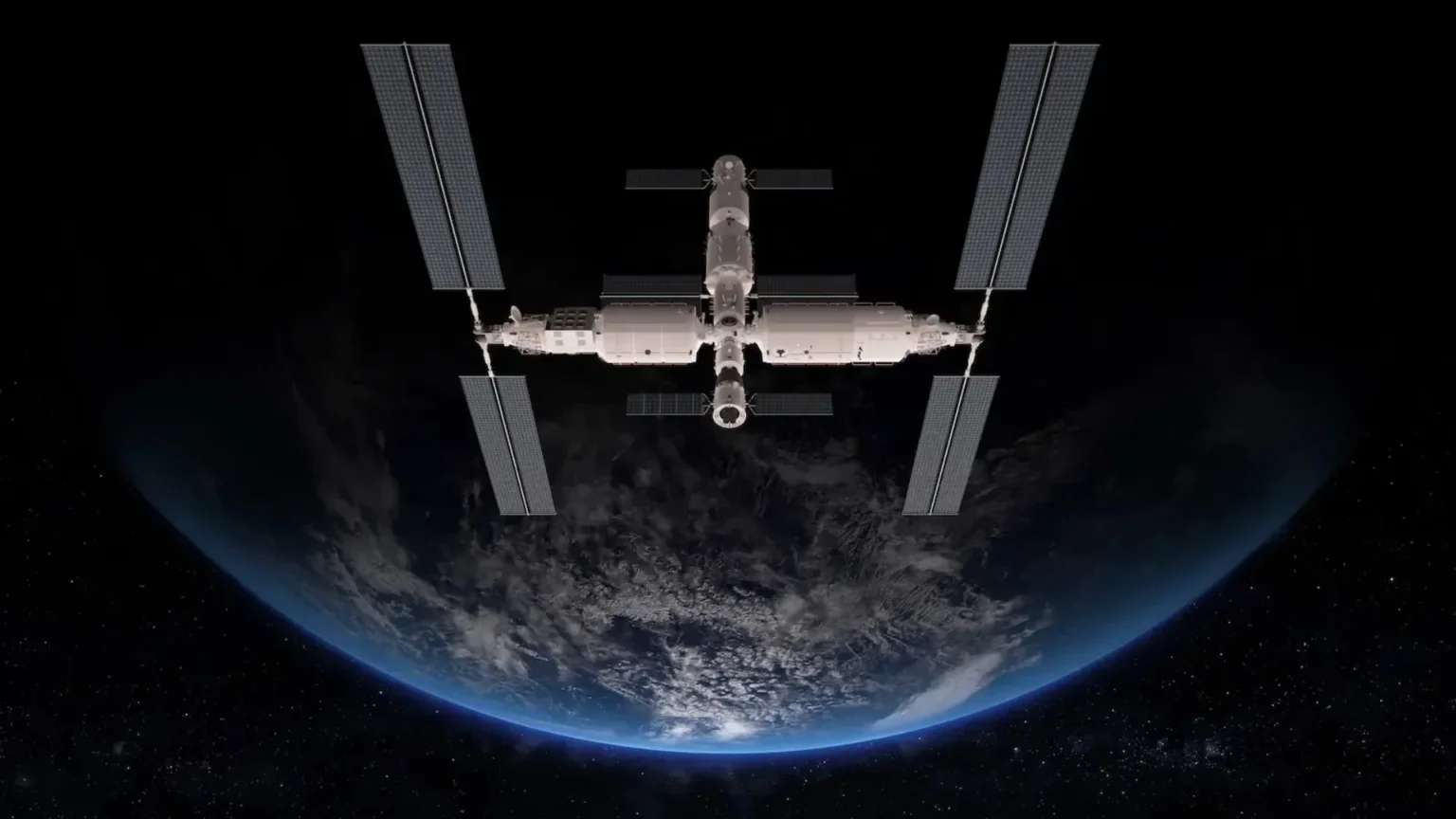

Technology companies are testing whether solar-powered servers in orbit can ease AI’s growing electricity demands, while confronting difficult questions about cooling, cost, and sustainability.
Data centers in space are drawing investment as AI’s growing demand for electricity puts pressure on infrastructure on Earth. For technology companies expanding their server networks, securing a reliable power supply is becoming as critical as obtaining the advanced chips that run their models, prompting them to explore whether solar-powered computing in orbit could offer a viable solution.
The International Energy Agency projects that data centers will account for nearly half of the growth in US electricity demand through 2030. Globally, their electricity consumption could more than double to around 945 terawatt-hours by the end of the decade, with AI driving much of that increase.
Against that backdrop, technology companies are investigating whether some computing infrastructure could operate beyond the terrestrial grid. Satellites equipped with AI processors would generate electricity from sunlight, perform calculations in orbit, and transmit results to Earth. The proposal offers potential relief from power shortages, although its commercial value remains unproven.
Why Data Centers In Space Appeal To Technology Companies
The strongest argument for orbital computing is access to solar energy. Carefully selected orbits can provide near-continuous sunlight, avoiding much of the interruption caused by nightfall and weather on Earth.
Google estimates that solar panels in suitable orbital conditions could generate up to eight times more power than comparable terrestrial installations. That figure describes the potential energy advantage under particular conditions, rather than a universal improvement available to every satellite.
For operators, the attraction extends beyond electricity generation. Computing infrastructure in orbit could reduce dependence on grid connections, land acquisition and local water supplies. Those considerations have become increasingly important as large projects compete for resources and encounter objections from surrounding communities.
However, avoiding terrestrial constraints introduces a different set of requirements. Orbital systems need launch services, reliable communications, radiation-resistant electronics, and equipment capable of operating without routine maintenance. Their financial case depends on whether these additional costs can be outweighed by the benefits.
Early Missions Are Testing The Hardware
Google’s Project Suncatcher is among the most prominent efforts to investigate that possibility. On October 1, 2026, a prototype satellite developed with Planet Labs launched aboard SpaceX’s Transporter-18 mission, carrying Google’s AI processors into orbit.
The experiment tests whether the company’s Tensor Processing Units can withstand launch stresses, radiation exposure, and the thermal conditions of space. Google is also developing laser connections for future satellite clusters, with a two-satellite test planned for 2027. Those connections would allow processors aboard separate spacecraft to exchange data at the speeds required for demanding AI workloads.
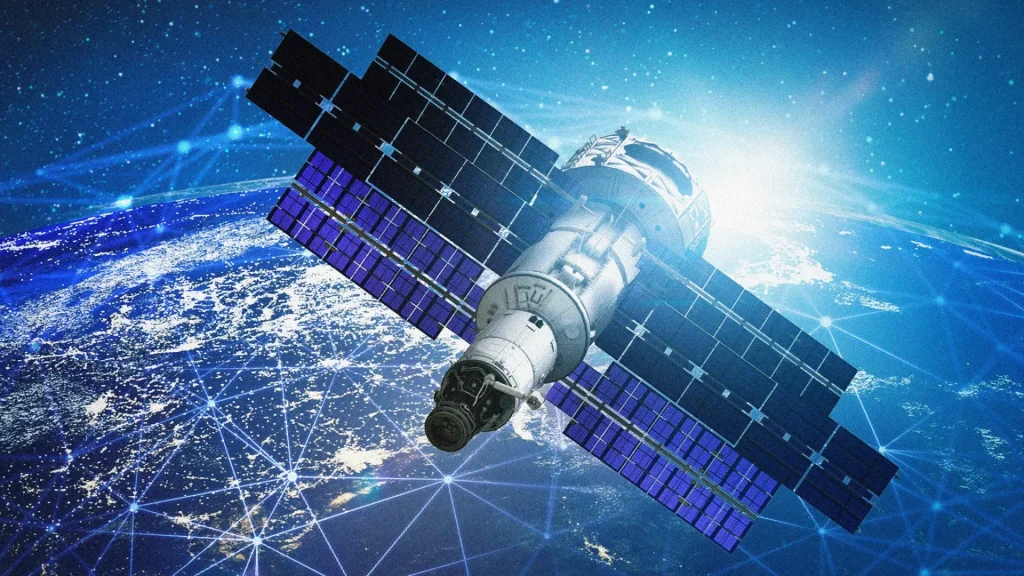
Starcloud has already taken another significant step. Its Starcloud-1 satellite launched in November 2025 carrying an Nvidia H100 processor, bringing hardware commonly associated with terrestrial AI computing into an orbital environment.
Nvidia has also announced its Space-1 Vera Rubin module for applications including orbital data centers. These developments show that the industry is moving beyond conceptual designs, although individual hardware demonstrations do not establish that large satellite networks can compete with conventional facilities.
Cold Space Still Presents A Cooling Problem
Cooling is one of the proposal’s most frequently misunderstood features. The absence of a warm atmosphere does not mean that a working processor will automatically remain cold, because its own electricity consumption generates heat that must escape.
On Earth, data centers use air circulation and liquid cooling to move heat away from processors. Spacecraft can also use liquid loops, heat pipes, and conductive materials to transport heat internally. The difficulty is releasing that heat into the surrounding vacuum, where there is no ambient air to carry it away.
Orbital systems therefore rely on radiators that emit thermal energy as infrared radiation. Their effectiveness depends on factors including surface area, operating temperature, material properties, and exposure to sunlight or heat from Earth.
For powerful computing installations, this creates a substantial design challenge. Increasing processing capacity means providing enough radiator capacity to prevent overheating, while keeping the equipment light enough to launch and robust enough to deploy.
Solar panels and radiators consequently become central parts of the computing infrastructure. A processor that performs well during a short experiment still has to demonstrate that it can sustain useful workloads within the spacecraft’s power and cooling limits.
The Financial Case Extends Beyond Launch Costs
Even if engineers resolve those problems, orbital computing must compete with facilities that operators can maintain and upgrade on the ground.
Launch costs are a major consideration, but they represent only part of the expense. The business model must also account for spacecraft construction, communications equipment, insurance, operating life, and replacing failed or outdated hardware.
AI equipment can lose its competitive advantage quickly as newer processors become available. On Earth, technicians can replace components and reorganise server installations; in orbit, upgrades may require another launch or specialised servicing.
Communications introduce further demands. AI training often requires rapid exchanges of large amounts of data between processors, while services for terrestrial customers need dependable links to the ground.
A plausible early market is computing that processes information already collected by satellites. Analysing imagery in orbit and transmitting selected results could reduce the volume of data sent to Earth. Serving wider commercial AI workloads would require a more extensive communications system.
Solar Power Does Not Settle The Environmental Question
The sustainability case also requires scrutiny beyond the source of electricity. An orbital installation may run on sunlight, but its environmental footprint includes manufacturing, launch, replacement, and disposal.
The research paper Dirty Bits in Low-Earth Orbit examined emissions across launch, operation, and reentry. Its worked examples found higher carbon costs for orbital computing even under optimistic assumptions, largely because of launch and reentry emissions. These findings challenge broad claims of environmental superiority, although they do not establish a single outcome for every future design.
Large deployments would also increase the demands placed on an already busy orbital environment. As satellite numbers grow, collision risks rise, making tracking, avoidance manoeuvres and end-of-life disposal essential operational concerns.
Former BlackRock portfolio manager Edward Dowd has raised a separate concern about the investment narrative. In a post on X, he argued that enthusiasm for space-based data centers risks distracting investors from the electricity shortages already constraining AI infrastructure on Earth.
The experiments now underway can establish whether particular processors, cooling systems and communications links work in orbit. Commercial operators will then have to demonstrate sustained performance, manageable replacement costs and a credible environmental case. Until those conditions are met, data centers in space remain a research investment rather than a dependable answer to AI’s immediate power needs.
Stay connected with Business Herald for the latest business news, insights, and updates.
Follow us on Facebook, Instagram, LinkedIn, and YouTube.
Join our growing community on WhatsApp and Telegram for real-time updates delivered directly to you.