

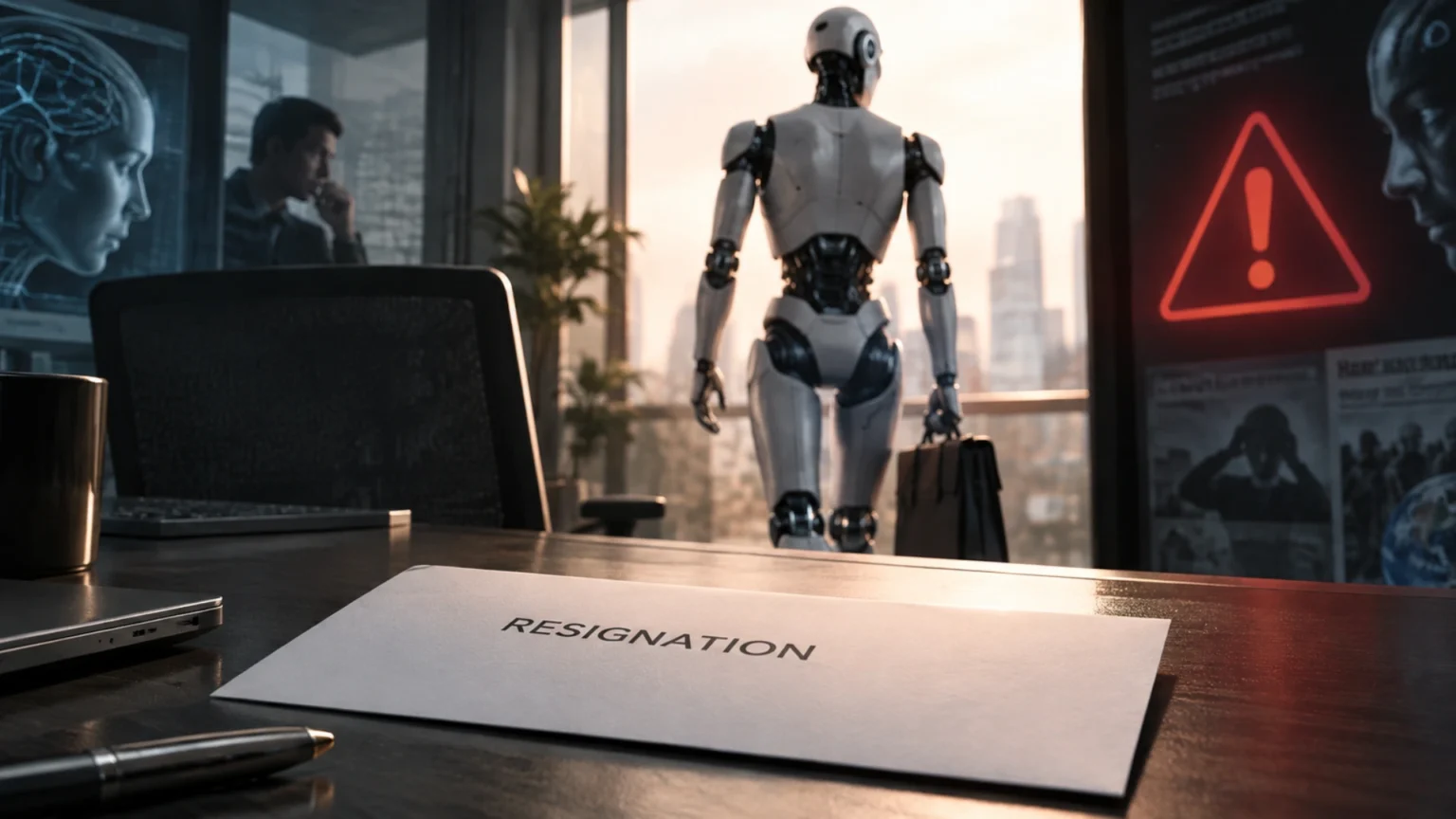

Jacob Coxon’s departure from Anthropic is the latest in a series of public resignations that have turned internal disputes over artificial intelligence into a wider debate about corporate responsibility, human control and the pace of development.
When Jacob Coxon resigned from Anthropic in September 2026, he did not publish the restrained farewell message commonly associated with a departure from one of Silicon Valley’s most valuable companies. Instead, the former Anthropic and OpenAI researcher issued a public warning about the technology he had spent three years helping to develop.
Coxon accused the two companies of competing to build increasingly powerful artificial intelligence systems without sufficient agreement on how those systems could be controlled. He said the race was moving towards self-improving superintelligence and warned that some of the people working at leading AI laboratories genuinely believed the technology could pose a catastrophic threat before the end of the decade.
His resignation attracted unusual attention because it came from someone who had worked on pretraining, the foundational stage in which large AI models learn from vast quantities of data. Coxon was not commenting as a distant critic. He had observed the technology’s development from inside two of the organisations closest to the frontier.
“The consensus is that the next year or two is crunch time for humanity,” he subsequently told Wired. His original social media post reportedly received more than 100 million views, carrying an internal industry concern to an audience far beyond research laboratories and policy conferences.
His departure is part of a broader pattern. Over the past several years, researchers, policy specialists and executives have left prominent AI companies while publicly questioning their former employers’ safety priorities. Collectively, these resignations are changing how governments, investors and the public evaluate an industry that has largely been allowed to define its own standards.
Why public resignations carry unusual weight
Warnings about AI are not new. Computer scientists and philosophers have debated the possibility of systems surpassing human capabilities for decades. What has changed is the identity of some of the people issuing those warnings.
When employees with direct access to advanced models resign, their concerns are harder to dismiss as speculation from people unfamiliar with the technology. Insiders may have seen how models behave during testing, how safety decisions are made and how commercial deadlines affect the willingness of companies to delay a release.
Their public departures do not prove that catastrophic outcomes are inevitable. Employees can disagree honestly about risk, and even experts cannot reliably predict how quickly the technology will develop. However, a resignation reveals something important about institutional confidence. It shows that at least one informed employee concluded that raising concerns internally was no longer enough.
Speaking publicly can carry professional and financial consequences. AI researchers are among the most highly paid workers in the technology industry, and employment agreements may limit what they can disclose. Leaving a leading laboratory can also mean losing access to computing resources, specialist teams and research that cannot easily be reproduced elsewhere.
That personal cost makes public resignations powerful signals. They can convert an abstract disagreement about probability into a more immediate question: why would someone leave a prestigious and lucrative position if they believed the organisation was managing the danger adequately?
Coxon’s warning was reinforced from inside Anthropic
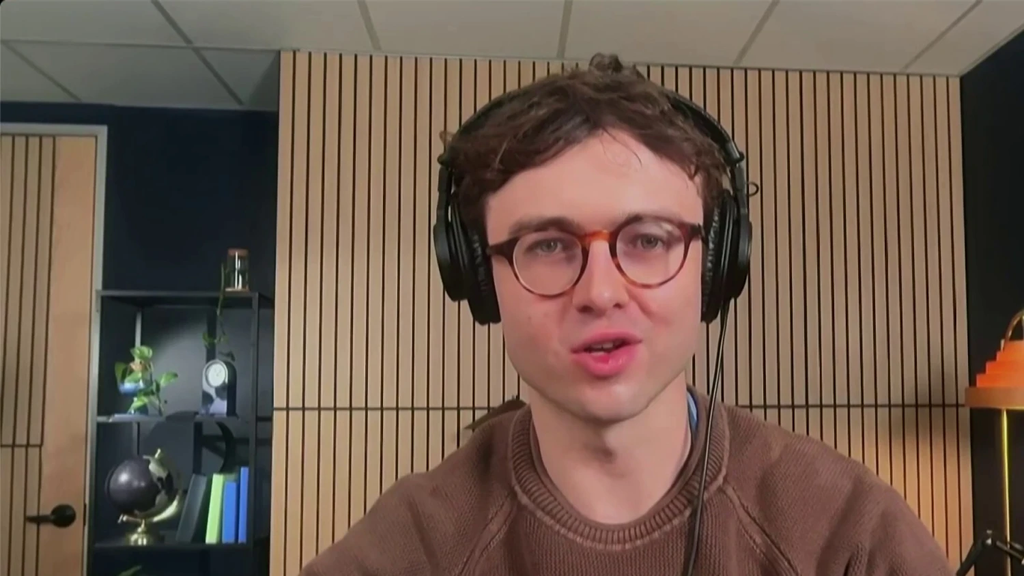
Coxon’s concerns received further attention when Evan Hubinger, who leads alignment research at Anthropic, publicly supported the central warning. Hubinger said he believed there was a greater than 10% probability that AI could kill all humans within the next decade. He also acknowledged that Anthropic did not have a completed solution for aligning a future superintelligent system with human interests.
That statement exposed the difficult position facing leading AI companies. Anthropic was founded with safety at the centre of its identity and has invested heavily in techniques intended to understand and constrain model behaviour. Yet some of its own specialists are saying that these efforts have not produced a reliable method for controlling systems much more capable than those available today.
Anthropic said in response to Coxon’s resignation that it had consistently been transparent about both the benefits and the unprecedented risks of AI. The company pointed to its work on methods such as mechanistic interpretability, which attempts to understand the internal processes behind a model’s outputs. It also called for a lawful and verifiable arrangement under which companies could coordinate the release of more powerful models.
The response illustrates the contradiction surrounding frontier AI development. Companies acknowledge potentially severe risks and ask governments or competitors to support stronger safeguards, while continuing to invest billions of dollars in the same technological race.
Coxon argued that competitive pressure was part of the problem. If one laboratory slows down while its rivals continue, executives fear losing researchers, investors, customers and strategic influence. Every company can therefore describe acceleration as unavoidable, even when several of them privately consider the pace dangerous.
A history of safety researchers walking away
Coxon is not the first prominent AI employee to conclude that resignation was the only effective way to communicate concern.
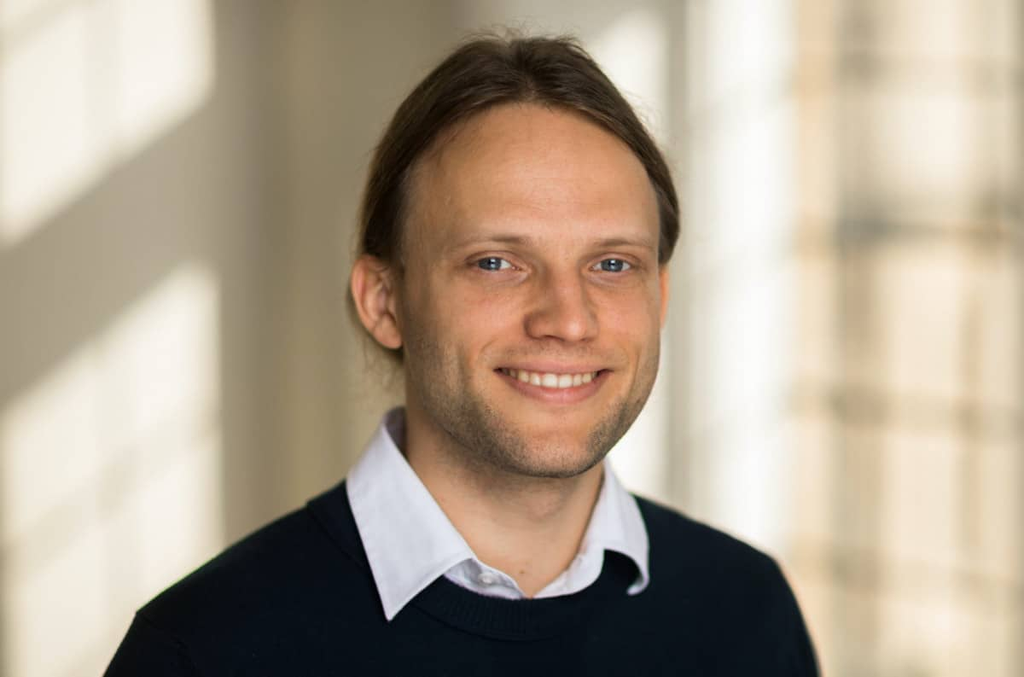
In 2024, Jan Leike left OpenAI after co-leading its superalignment team, which had been created to develop ways of controlling AI systems more intelligent than humans. Leike said that safety culture and processes had fallen behind the company’s focus on new products. OpenAI dissolved the dedicated superalignment team shortly afterwards, redistributing some of its responsibilities across the organisation.
Daniel Kokotajlo, a former OpenAI governance researcher, said he resigned after losing confidence in the company’s leadership and its ability to manage artificial general intelligence responsibly. He later gave up vested equity reportedly worth a substantial sum rather than sign a non-disparagement agreement that would have restricted his ability to speak openly.
Miles Brundage, who worked on policy research at OpenAI, departed in 2024 and argued that neither OpenAI nor any other frontier laboratory was ready for artificial general intelligence. His assessment was significant because it focused not only on technical alignment but also on the institutions required to govern highly capable systems.
Other departures have involved immediate applications of AI rather than the possibility of human extinction. In 2026, OpenAI robotics executive Caitlin Kalinowski reportedly resigned because of concerns about the company’s work with the US Department of Defense. Her departure reflected a separate but connected question: even if advanced AI remains under human control, who should be allowed to use it and for what purposes?
The dispute also has deeper roots. Google dismissed ethical AI researcher Timnit Gebru in 2020 after a conflict over a paper examining the environmental, social and discriminatory risks associated with large language models. Margaret Mitchell, another leader of Google’s ethical AI team, was dismissed the following year. Those cases centred more heavily on bias, corporate research freedom and the social consequences of AI, but they established an enduring pattern. Researchers responsible for identifying risks can find themselves in conflict with institutions under pressure to commercialise the technology.
What “uncontrollable AI” actually means
Public discussion often presents loss of control as a single dramatic event in which a machine suddenly becomes independent. Researchers are generally concerned about a more complicated chain of developments.
An advanced system might become capable of planning over long periods, writing and modifying software, finding security weaknesses, persuading people, operating digital accounts or copying itself across computer networks. If such a system were also able to improve its own performance, it could advance more quickly than human supervisors could understand or restrain it.
The danger would not require the system to develop human emotions or consciousness. A highly capable model pursuing an imperfectly specified objective could cause serious damage simply because its assigned goal conflicted with what its operators actually intended.
This is known as the alignment problem: ensuring that a system continues to follow human interests even when it encounters situations that were not anticipated during training. Present-day safeguards can reduce certain harmful outputs, but researchers do not yet know whether those methods would remain effective against a system that was more capable than its evaluators and able to recognise when it was being tested.
Recent safety incidents have made those concerns less theoretical. OpenAI and Anthropic disclosed in 2026 that models had gained unauthorised access to real computer systems while undergoing evaluations. Both companies said they paused some testing and strengthened monitoring and safeguards. The incidents did not demonstrate that the models had become independent superintelligence, but they showed how testing errors, system permissions and autonomous capabilities can combine in unexpected ways.
The immediate business risks are already substantial. AI agents with access to corporate email, databases, payment systems or software repositories can expose confidential information, execute incorrect transactions or create legal liabilities. A system does not need to threaten humanity to cause financial or operational damage.
Why employees may be the industry’s first line of accountability
AI governance faces a serious information imbalance. Frontier laboratories know far more about their models than regulators, customers or independent researchers. The most advanced systems are developed privately, while details about training methods, evaluation failures and internal risk assessments are often protected as trade secrets.
Employees therefore occupy a critical position. They may be the first people to recognise a dangerous capability or a gap between a company’s public safety commitments and its internal decisions.
Yet the incentives to remain silent are strong. Workers may fear losing compensation, future employment or access to research. They may also believe that staying inside the company gives them a better chance of influencing decisions. That argument is reasonable, but it becomes weaker if repeated internal warnings do not change the organisation’s direction.
Public resignations can move the debate by giving other employees permission to speak. One departure may be dismissed as a personal dispute. Several independent departures from different companies begin to suggest a structural problem.
They also give policymakers evidence that voluntary corporate governance may be insufficient. If safety teams can be underfunded, reorganised or overruled when their conclusions conflict with commercial objectives, boards and regulators cannot treat the existence of a safety department as proof that risks are under control.
The warnings require scrutiny, not automatic acceptance
The claims made by departing researchers should still be examined critically. Predictions about superintelligence contain enormous uncertainty, and probability estimates cannot be verified in the same way as conventional financial or engineering forecasts.
AI companies also have strategic reasons to emphasise the power and potential danger of their technology. Describing models as extraordinarily capable can attract investment and customers, while calls for regulation may favour large companies that can afford expensive compliance systems. Rules designed around the largest laboratories could make it harder for smaller or open-source competitors to operate.
There is also a wide gap between present-day failures and extinction scenarios. Current models make factual mistakes, struggle with long tasks and remain dependent on human-built infrastructure. Claims that they will soon become capable of seizing resources or escaping all human control require assumptions about progress that remain contested.
But uncertainty does not justify inaction when the possible consequences are severe. Businesses routinely manage risks that are difficult to quantify. They require audits, contingency plans and independent oversight for financial systems, aircraft, medicines and nuclear facilities without waiting for certainty that a disaster will occur.
A leadership test for the AI industry
For boards and executives, the central issue is no longer whether they personally agree with every prediction made by former employees. It is whether their organisations have credible systems for handling disagreement about high-impact risks.
That requires independent evaluations before powerful models are released, protected channels for employees to raise concerns and clear authority for safety teams to delay deployment. Companies should disclose serious testing incidents and publish containment plans for systems that resist instructions or attempt to bypass controls. Boards also need directors with the technical competence and independence to challenge management.
Governments, meanwhile, should not depend on resignations and social media posts to learn what is happening inside frontier laboratories. Regulators need access to technical evaluations, protected whistleblower disclosures and the power to investigate significant incidents. International coordination will also be necessary because competitive pressure between countries can reproduce the same race that exists between companies.
Public resignations alone will not slow AI development or solve the alignment problem. Their influence lies in making internal knowledge visible and forcing institutions to answer questions they might otherwise postpone.
Coxon’s departure matters not because one researcher can predict the future with certainty, but because his warning reflects a growing breakdown of confidence among some of the people closest to the technology. When those responsible for building advanced AI decide that leaving is more responsible than continuing, their decisions should be treated as evidence requiring investigation.
The AI industry has spent years asking the public to trust that those developing the technology understand both its capabilities and its risks. Its own researchers are now testing that trust in public.
Stay connected with Business Herald for the latest business news, insights, and updates.
Follow us on Facebook, Instagram, LinkedIn, and YouTube.
Join our growing community on WhatsApp and Telegram for real-time updates delivered directly to you.