

Eye care has always relied on precision, but the tools behind that precision are changing fast. Technological trends in optometry are transforming how eye conditions are diagnosed, monitored, and treated, giving both practitioners and patients access to a level of accuracy that simply wasn’t possible a decade ago.
This article explores the most significant technological trends in optometry, why they matter for patient outcomes, and what the future of vision care is likely to look like as these innovations mature.
Why Technological Trends in Optometry Matter Now
Vision problems affect billions of people worldwide, and demand for eye care continues to grow alongside aging populations and increased screen time. At the same time, technological trends in optometry are helping practices meet this demand more efficiently, catching conditions earlier and personalizing treatment in ways traditional methods couldn’t.
For patients, this means faster diagnoses and more comfortable, less invasive exams. For practitioners, it means better clinical data and more confident treatment decisions.
Artificial Intelligence in Eye Diagnostics
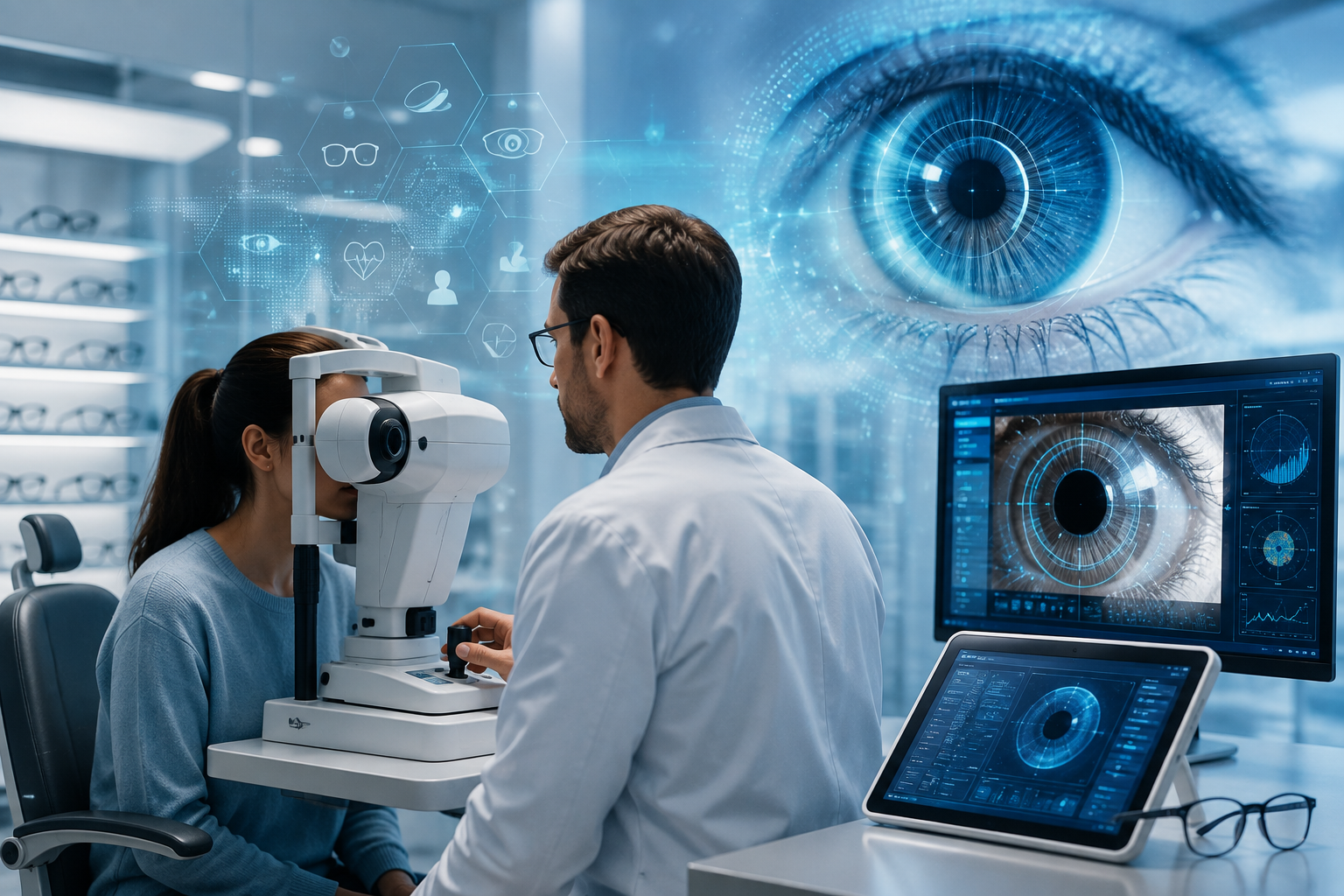
One of the most impactful technological trends in optometry is the growing use of artificial intelligence in diagnostic imaging. AI-powered software can now analyze retinal scans to detect early signs of diabetic retinopathy, glaucoma, and macular degeneration, often before symptoms are noticeable to the patient.
Key Benefits of AI-Assisted Diagnostics
- Early detection: AI can flag subtle changes in retinal images that might be missed by the human eye.
- Consistency: Algorithms apply the same diagnostic standards across every scan, reducing variability.
- Efficiency: Automated pre-screening allows optometrists to focus their time on complex cases.
Advanced Imaging and 3D Retinal Mapping
Traditional eye exams relied heavily on manual measurements and basic imaging. Today, optical coherence tomography (OCT) and 3D retinal mapping provide cross-sectional views of the retina in remarkable detail, allowing practitioners to detect structural changes long before vision loss occurs.
This shift toward high-resolution, non-invasive imaging is a defining part of current technological trends in optometry, giving clinicians a far more complete picture of eye health in a single visit.
Smart Contact Lenses and Wearable Vision Technology
Perhaps the most futuristic development among technological trends in optometry is the rise of smart contact lenses. These lenses are being developed to monitor intraocular pressure for glaucoma patients, track glucose levels for diabetics, and even adjust focus dynamically for presbyopia.
Wearable vision technology extends beyond lenses; smart glasses with built-in vision correction and augmented reality overlays are helping visually impaired users navigate their environments with greater independence.
Teleoptometry and Remote Eye Care
Remote healthcare has expanded rapidly, and vision care is no exception. Teleoptometry platforms now allow patients to complete preliminary vision screenings from home, with results reviewed remotely by licensed optometrists.
This trend is especially valuable for patients in rural or underserved areas who previously had limited access to specialized eye care. It also reduces the burden on in-person clinics, allowing them to prioritize patients who need hands-on examination or treatment.
Personalized and Precision Lens Technology
Lens manufacturing has also benefited from these technological trends in optometry. Digital measurement tools now capture highly precise data about a patient’s eye shape, prescription, and even lifestyle habits, resulting in custom-fit lenses that offer sharper vision and better comfort than standard options.
3D printing is also beginning to play a role, enabling faster production of custom frames and lenses tailored to individual facial structures.
Challenges in Adopting New Eye Care Technology
Despite clear benefits, integrating new technological trends in optometry into everyday practice isn’t without obstacles:
- The cost of equipment, advanced imaging, and AI tools requires significant upfront investment.
- Training requirements: staff need time and resources to learn new systems effectively.
- Data privacy: handling sensitive patient health data requires strict security protocols.
- Patient trust: some patients remain hesitant about AI-assisted diagnoses without human oversight.
Practices that address these challenges thoughtfully tend to see stronger long-term adoption and better patient satisfaction.
What This Means for Patients
For everyday patients, these technological trends in optometry translate into real, practical benefits:
- Earlier detection of serious eye conditions
- More comfortable, faster exams
- Greater access to care through remote screening options
- Better-fitting, more personalized corrective lenses
Final Thoughts
The pace of innovation across technological trends in optometry shows no signs of slowing down. From AI-powered diagnostics to smart lenses and teleoptometry, these advances are making vision care more accurate, accessible, and personalized than ever before.
As these technologies continue to mature, both practitioners and patients stand to benefit from a future where preserving eyesight is easier, earlier, and far more precise.
Stay connected with Business Herald for the latest business news, insights, and updates.
Follow us on Facebook, Instagram, LinkedIn, and YouTube.
Join our growing community on WhatsApp and Telegram for real-time updates delivered directly to you.